




Related news
-
What Makes the New Foldable Rain Boots from Trenboo Truly All-Terrain Ready?
-
How to Make Rubber Boots with Neoprene Lining: Material, Process, and Benefits
-
How Do Insulated Winter Rubber Boots with Collars Improve Fit, Warmth and Performance?
-
What Is the Difference Between Waterproof and Water-Resistant Boots?
How Do Insulated Winter Rubber Boots with Collars Improve Fit, Warmth and Performance?
In the niche of insulated winter rubber boots, one of the fastest-growing features is the ankle/shaft collar design — particularly among children’s boots. This includes collars built of neoprene or faux/fur materials that serve not only as a comfort and warmth enhancer but also as a fit and retention mechanism. This article presents a technical and sourcing-oriented overview of these boots, focusing on the collar structure, materials, manufacturing impact and market relevance — aimed at retail, wholesale and OEM/ODM decision-makers, not end-consumers.
Why the Collar Structure Matters in Winter Rubber Boots
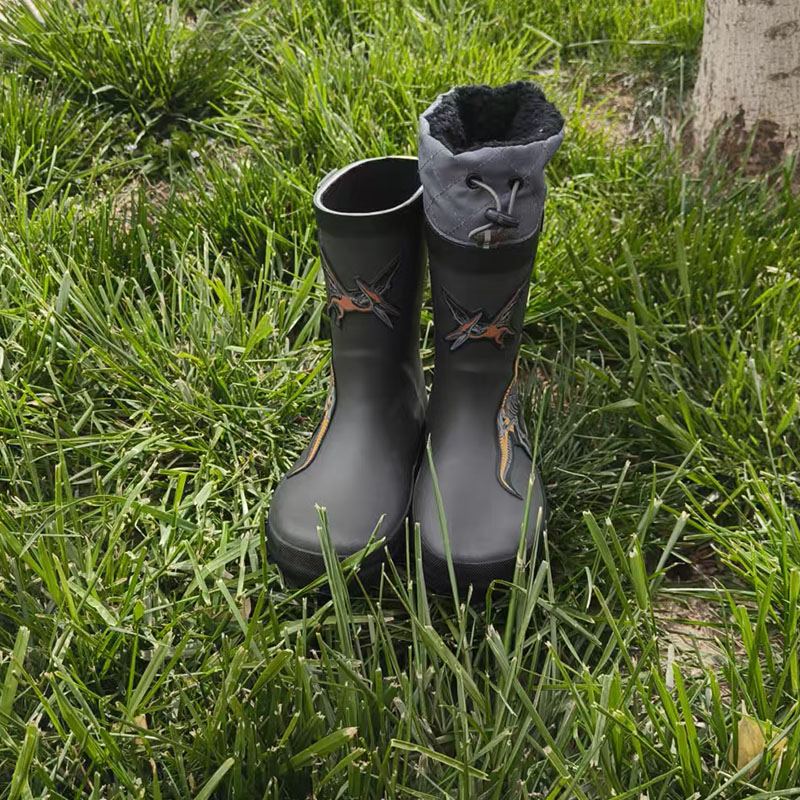
Fit and retention for small feet
Children – with thinner legs, smaller feet and more variable leg-shapes – pose specific design challenges. Boots can easily slip off, gaps can form around the ankle/shaft, letting in snow or cold. A well-designed collar helps tie the boot securely around the leg, reducing slippage.
Thermal envelope and insulation
In winter conditions (snow, slush, low temperatures), the collar performs as a barrier: it prevents snow intrusion, blocks airflow up the shaft, and if built of insulating material, traps warm air.
Waterproofing and intrusion control
Even if the boot shell is fully waterproof (rubber or neoprene), a weak collar means water or snow can enter over the top of the boot. A collar that extends higher, fits snugly, or includes waterproof materials improves overall boot performance.
Market differentiator
From a retailer/brand viewpoint, adding a collar (especially one with premium materials like neoprene or faux-fur) moves the product from basic winter rubber boot to a higher-value proposition: “warm winter rubber boots” or “rain boots with collar” become more credible. That helps in positioning, margin and premium shelf-space.
Material and Construction of Winter Collars in Rubber Boots
Collar materials – neoprene and fur/faux-fur
Neoprene collars: Derived from the same closed-cell foam concept used for linings and boots, a neoprene collar provides waterproofing, insulation and flexibility.
Fur or faux-fur collars: These provide additional warmth, a cozy aesthetic, and often a higher perceived value (especially in kids fashion winter boots).
Collar height and design considerations
Collar height: A higher collar (rising above the ankle) retains warmth along the lower leg and reduces intrusion of snow.
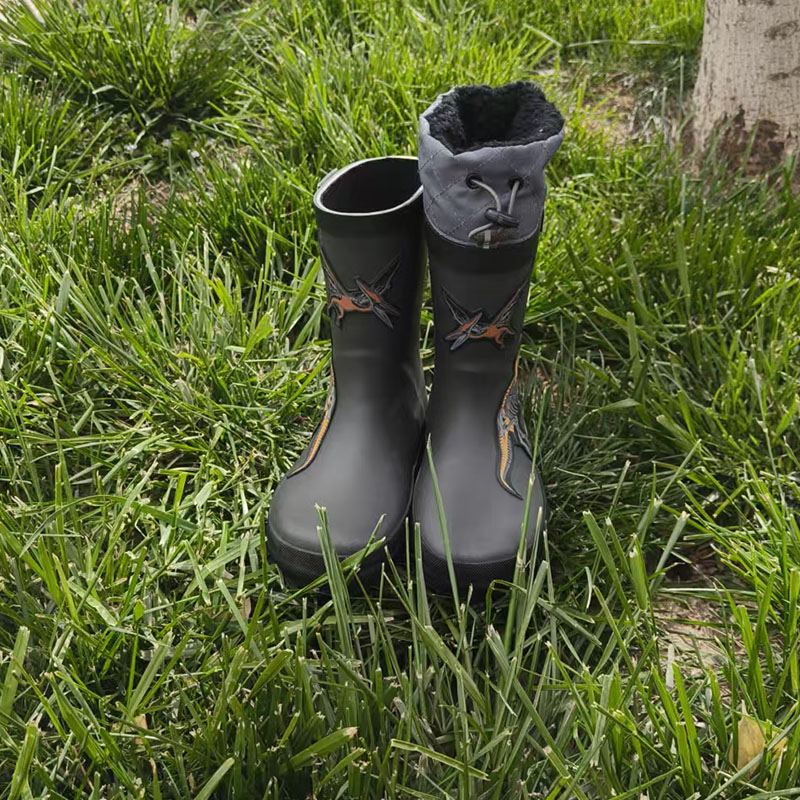
Collar fit & retention: The collar should grip the leg without being too tight. Elastic inserts, drawcords or snug inner materials help.
Integration with boot shaft: The collar must be bonded, stitched, or otherwise integrated without compromising waterproofing.
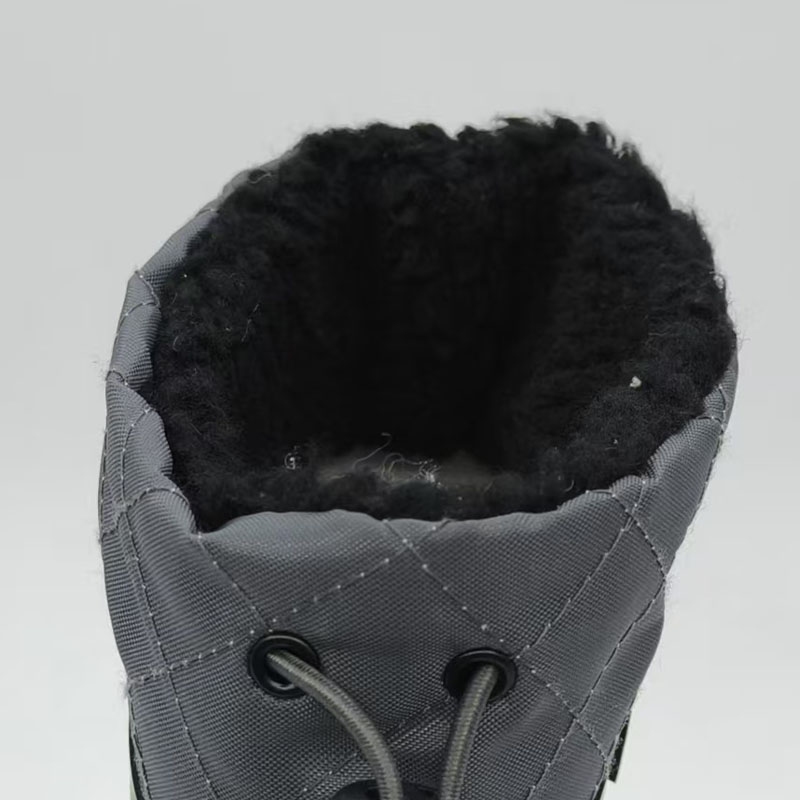
Manufacturing and sourcing implications
Specification: Brands must specify collar height, material (e.g., 3 mm neoprene + 1.5 mm fleece), collar attachment method (stitch, glue, overlay), and performance criteria (e.g., fit retention, water intrusion).
Bonding and sealing: The transition area between rubber shell, collar and lining must be sealed—poor finishing leads to cold spots or water ingress.
Supply chain: Factories must be capable of adding collar components (neoprene sock-type liner, fur/faux-fur collar panels), lasting rubber shell, and ensuring the collar remains robust after wear/flex fatigue.
Cost control: Adding a collar (especially fur/faux-fur) increases cost: extra material, finishing, and possibly more complex moulding or assembly steps. Brands must balance cost vs performance.
How the Collar Feature Enhances Performance of Warm Rubber Winter Boots
Improved insulation and comfort
An insulated collar helps trap warm air around the leg and reduces heat loss at the shaft top. When paired with an insulated boot base (for example a neoprene-lined, rubber-shelled boot) the overall thermal envelope is greatly improved. This is important in use-cases like children playing in snow or slush.
Better waterproof performance
Even the best rubber shell fails if water enters via the top of the boot. A collar that overlaps well, fits snugly, or includes waterproof material helps maintain that barrier. Combined with rubber shell, this gives rubber insulated winter boots genuine waterproof and warm credentials.
Enhanced fit and usability
For kids especially, a collar that helps secure the boot around the leg reduces slippage, reduces risk of the boot falling off or the child needing frequent adjustment. That enhances user-experience, reduces returns/complaints, and strengthens retail performance.
Styling and market appeal
Collars offer a visible design feature (fur trim, contrasting neoprene cuff, pull-tabs, logos) which supports premium pricing and differentiation. In the winter boot market, warm rubber winter boots with collar look more premium than plain boots.
Adaptation for diverse environments
From wet rainy feeds to snowy slush to cold temperatures, the collar helps adapt the boot to multiple winter conditions. For example, the collar can keep snow out, the lining keeps feet warm, the rubber shell keeps feet dry — collectively enabling the best rubber boots for winter claims.
Target Applications and Market Segments
Children’s winter outdoor gear segment
Given the specific design considerations (thin legs, smaller feet, high activity), kids’ boots make perfect use of collars. Boots with neoprene liners, rubber shells, and high insulated collars are sold as premium items for snow, slush, rainy playgrounds.
All-weather outdoor brands & retailers
Retailers offering “rain boots with collar”, “warm rubber winter boots” or “insulated winter rubber boots” can address both functional performance (waterproof, insulated) and lifestyle/fashion. The collar helps bridge function + aesthetics.
OEM/ODM opportunities for private label
For brand owners seeking private-label boots, manufacturing collars is a way to differentiate. Collar materials (neoprene vs fur), height, finishing, and custom graphics/tabs can be specified. Brands should partner with factories that have experience in this multilayer structure (rubber shell + liner + collar) and in children’s sizing.
Seasonal marketing and merchandising
In the winter buying cycle, positioning boots as “warm rubber winter boots with collar” or “insulated winter rubber boots with high collar for snow play” helps to capture higher margin and seasonal trade. The collar becomes a key talking point in merchandising.
Specification and Sourcing Checklist for Collared Winter Rubber Boots
For business clients sourcing such boots, the following checklist is recommended:
Collar material: Specify neoprene foam thickness (e.g., 3–5 mm) and optional fleece/fur overlay; or faux‐fur pile depth.
Collar height: Shaft height above ankle; collar overlap on leg.
Collar attachment: Method of assembly (stitched + bonded, over-laid rubber cuff, elastic insert, drawcord).
Waterproofing at collar interface: Sealing of seams, finishing of top edge, rubber/rubber-collar bonding.
Fit/retention: Testing for slippage off leg; measurement of calf circumference tolerance; child comfort.
Thermal insulation: Collar acts with liner and boot shell — specify performance (cold-temperature rating).
Weight and flex: Collar material should add minimal bulk/weight, and not reduce flex at shaft or create rigidity.
Durability: Resistance of collar to abrasion, flex fatigue, delamination; pull-tabs or handles should be robust.
Branding/custom options: Collar colour/contrast, logo tab, reflective strip, pull-loop, kids-friendly graphics.
Sustainability/Compliance: Materials used in collar (e.g., faux-fur certification, neoprene supplier traceability), manufacturing compliance (child-sized boots safety, factory audits).
MOQ/Lead-time: Collars add complexity; confirm factory’s capacity for custom collar runs, lead-times for winter season drop.
Quality assurance: Test report for waterproofing (including top-entry intrusion), cold-weather insulation, strap/collar retention tests, fit & comfort check.
Summary
Insulated winter rubber boots featuring a collar (neoprene or fur/faux-fur) represent a high-value segment in children’s and outdoor footwear. The collar addresses specific performance needs (fit, retention, waterproofing, warmth) and provides a strong differentiator from basic boots. From a sourcing and manufacturing lens, brands and retailers must specify collar material, height, assembly, waterproof sealing and comfort fit. For OEM/ODM partnerships, customizing the collar offers a niche to command premium pricing and differentiate. With winter outdoor activity on the rise, the market for warm rubber winter boots, insulated rubber boots for winter, rain boots with collar is set for growth — and the collar feature is a critical component of product success.
Partner with Trenboo for Custom Kids’ Insulated Winter Boots – Explore ODM/OEM Solutions Today!
Insulated winter rubber boots with collars exemplify precision in material science and design, merging neoprene insulation and fur barriers to deliver unparalleled warmth and security for children’s feet. From manufacturing intricacies to multifaceted applications, these boots adapt to global winter challenges, promoting durability and activity in cold conditions. As market innovations continue, their foundational role in protective gear remains unchallenged.
For brands and partners pursuing excellence in warm winter rubber boots production, Trenboo delivers tailored ODM/OEM services.Trenboo is With advanced facilities crafting up to 150,000 pairs monthly, including customizable neoprene and fur collars for kids’ insulated designs. Contact Trenboo today for quick quote.

 consult
 WHATSAPP
 leave message
 top
top