





What Exactly Are Cowboy Rubber Rain Boots?
Introduction
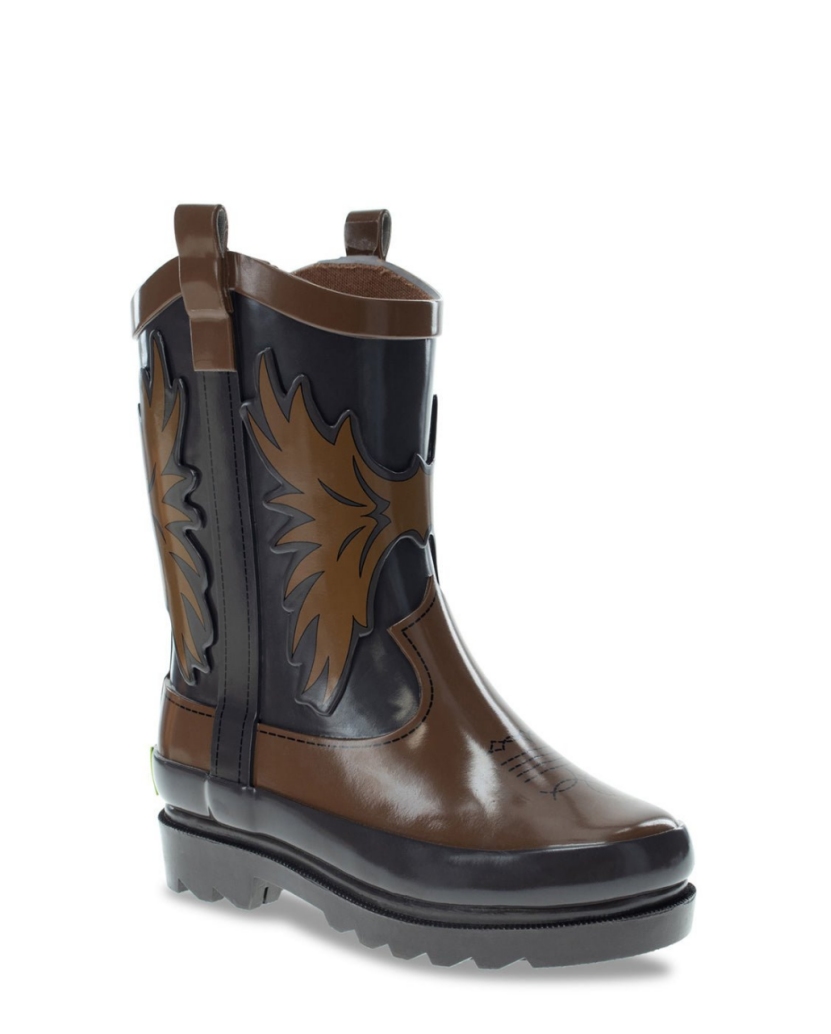
The phrase “cowboy rain boots” points to a special kind of shoe. It mixes the familiar look of the old Western cowboy boot with the strong, water-blocking power of a rubber rain boot.Click here to watch the product demo video
A Brief History of the Cowboy Boot
The usual cowboy boot started in the Western United States during the 1800s. Old stories say that riding boots worn by soldiers and vaqueros in the late 1800s slowly turned into a real “cowboy boot” for jobs on wide open fields.
Key influences:
Spanish and Mexican “vaquero” boot styles arrived in the Americas. They helped shape the cowboy boot’s form.
Army cavalry boots changed early plans. After the U.S. Civil War, cowboys wanted boots that fit better for stirrup tasks and tough ranch days.
By the end of the 1800s, skilled boot makers like Hyer Boots in Kansas started building boots just for working cowboys.
As for design parts, the standard cowboy boot shows:
A tall shaft (often mid-calf or higher). This guards the lower leg. It also helps when a rider sits on a horse.
A sharp or pointed toe (or at least slimmer than most boots). This lets the foot slip quickly into a stirrup.
A high-angled heel (sometimes known as a cowboy heel). It holds the boot steady in the stirrup during rides.
A V-shaped collar or top opening in many types. This makes taking off the boots simpler when the rider steps down.
So, the cowboy boot grew from real needs. It worked best for riding horses, using stirrups, and handling ranch chores.
Why Combine Cowboy Boot Style with Rubber Rain Boot Functionality?
Functionality Meets Style
The classic leather cowboy boot shines in dry ranch areas and horse rides. Yet it falls short in wet, muddy, or rainy spots.
Leather drinks in water. It loses strength. It can turn slick.
Old leather boots often miss full waterproof cover. They prove hard to clean on muddy or soaked ground.
On the other hand, rain boots built from rubber or man-made stuff give great water protection. But they usually drop the famous cowboy outline.
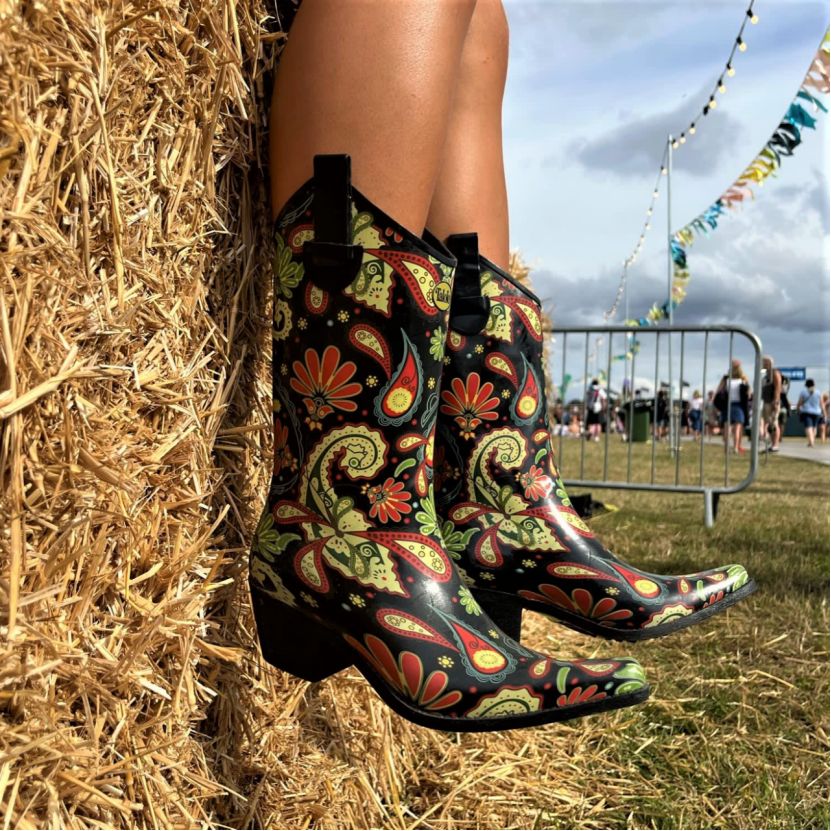
When you join the two, you gain the clear cowboy boot shape (sharp toe, high heel, V-collar). You pair it with rubber (or synthetic) material made for blocking water, simple cleaning, and weather safety. This creates cowboy rain boots that meet both useful and pretty goals.
Practical Advantages
Waterproofing: Rubber tops and bottoms keep feet dry in heavy rain or areas full of puddles.
Slip / Stirrup Compatibility: The cowboy boot form (heel and toe) still aids stirrup use if needed in horse or ranch settings.
Style Versatility: The Western look stays easy to spot. Thus, people can wear the boots for real tasks (outdoor jobs) or just for fun (rainy days in city or country spots).
Durability & Cleaning: Rubber boots rinse off mud fast. They last in wet and muddy places. They need less care than leather.
Market Evidence
Bulk sale lists and trade pages show that rubber cowboy rain boots are growing popular. Also, there are bulk rubber cowboy rain boot deals with set minimum orders. This points to large making size and business interest.
Key Functional & Design Features of Cowboy Rubber Rain Boots
To grasp what builds a solid pair of cowboy rain boots, look at these points. They deserve focus.
Heel, Toe and Collar
Sharp/Narrow toe: This helps the foot glide into stirrups with ease. It also fits snug in the boot. It follows the first cowboy boot purpose.
High heel: It locks the foot in the stirrup when on a horse. It lifts the foot a bit above wet or muddy dirt.
V-shaped collar (or pull tabs): This eases boot removal. It often copies classic cowboy boot looks.
Material & Waterproof Construction
Upper material: In rubber cowboy rain boots, the upper part is rubber (natural or synthetic) or a waterproof coated fabric. It offers full waterproofing, not just resistance. For example, some PVC or rubber upper boots are called water-resistant or waterproof.
Sealed seams or one-piece moulding: Strong waterproof boots cut down seams that might leak.
Outsole & traction: A rubber outsole with deep tread stops slips in wet spots. One supply note stresses “a good drainage pattern … will guarantee a firm grip even on slurpy and unsafe ground.”
Interior lining: Some boots add removable insoles or neoprene liners for cold days or extra ease.
Design Aesthetics & Wholesale Considerations
Classic cowboy silhouette: Shaft height, angled heel, slimmer toe, pretty stitching or just the Western boot outline. Trade pages say that even rubber types keep the cowboy-inspired shape on purpose.
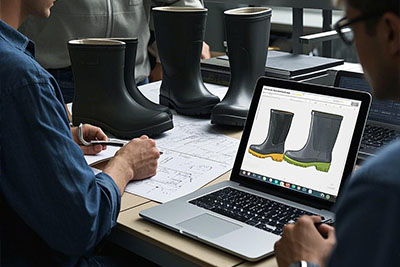
Wholesale manufacture / OEM/ODM: With rising interest in this small market, many makers sell rubber cowboy rain boots in large amounts. They often allow changes.
Care & Maintenance: Rubber stands up better than leather. Still, proper drying and storage matter. Skip direct heat or sunlight that can harm rubber. Wipe off mud after wear. Keep in cool shade.
Why Waterproof Feature is Critical for Cowboy Boot-style Rain Boots
Many tasks linked to cowboy boots (ranch jobs, riding, outdoor paths) face water, mud, and changing ground. So, the waterproof part turns vital. Main reasons include:
Wet terrain & weather: Ranches, fields, trails often hold wet soil, puddles, or rain. Boots that take in water grow heavy. They feel bad. They wear out quicker.
Stirrups & mounting: When getting on a horse or ox, slips or water entry can hurt safety. A high heel and waterproof boot aid the rider in staying steady.
Seasonal / wholesale demand: As mentioned, trade info reveals rising search numbers and bulk interest for rubber cowboy rain boots.
In brief: the waterproof rubber cowboy boot is more than a style choice. It fills a true useful hole when cowboy boot looks meet wet weather and outdoor needs.
Choosing the Right Cowboy Rain Boots — Key Considerations
When checking or buying cowboy rain boots (for own use or bulk), think about these items.
Shaft height: Is mid-calf enough, or full height required? Taller boots block more splash, mud, animal steps.
Heel height & angle: A medium to high heel keeps the cowboy boot view. It saves stirrup fit. Too high might cut walking ease.
Toe shape: A narrow or pointed toe boosts the cowboy feel. But for lots of rain walking, some pick a rounder toe for comfort.
Material quality: Natural rubber often lasts longer and bends better than cheap PVC. Look for seamless or well-sealed build.
Traction and outsole design: Wet or muddy spots need tread patterns and slip-proof rubber.
Interior comfort and lining: If boots stay on long in cold or wet times, neoprene lining or padding helps.
Wholesale / OEM flexibility: For sellers, giving custom options (branding, color, size choices) can stand out.
Maintenance & storage: Clean them after use. Dry away from direct sun. Store in cool shade to keep rubber strong.
The Case for Cowboy Boot Styled Rain Boots in Modern Markets
Long ago, cowboy boots helped ranchers and horse riders. Now, the rubber cowboy rain boot fits several current groups.
Outdoor workers & ranch settings: Here, waterproofing, horse fit, and Western style join real use.
Rainy/muddy terrain gear for rural/semi-rural settings: Farmers, outdoor event helpers, festival staff might choose the cowboy outline over plain rain boots.
Fashion & lifestyle markets: The Western look stays liked. Mixing fashion with use can reach small fashion groups in wet areas.
Wholesale/retail supply: With growing searches for “rubber cowboy rain boots” and one-piece rubber cowboy silhouette boots, chances exist for OEM/ODM making.
Spotlight on Trenboot: Manufacturer & OEM/ODM Capabilities
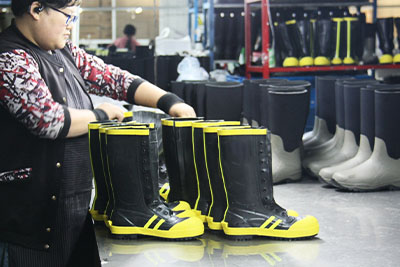
For bulk buyers and brands wanting top cowboy rain boots wholesale answers, Trenboo focuses on changeable, high-grade vulcanized rubber choices. With ODM/OEM services, a 150,000-pair monthly capacity, and quadruple guarantees on quality, environment, technology, and service, Trenboo supplies custom cowboy style rain boots set for world markets.
Contact Trenboo today at https://www.trenboot.com/odm-oem/ to check custom designs and boost your product line with tough, nice waterproof cowboy boots.

 consult
 WHATSAPP
 leave message
 top
top