



Verwandte Nachrichten


Sicherheitsschuhe für den Bergbau: Wichtigste körperliche Anforderungen für den Einsatz auf Bergwerksgeländen
Sicherheitsschuhe für den Bergbau sollten an die jeweiligen Gefahren am Arbeitsplatz angepasst und nicht als universelle wasserdichte Schuhe betrachtet werden. Untertagebergwerke, Tagebaue, Tunnelbauprojekte und Mineralaufbereitungsanlagen setzen die Schuhe unterschiedlichen Einflüssen aus Wasser, Schlamm, abrasivem Gestein, scharfkantigen Trümmern, Stößen, Schlämmen, Ölen und wiederholter Beanspruchung aus.
Für Importeure von PSA, Industriegroßhändler, Lieferanten von Arbeitskleidung und Eigenmarkenprogramme sollten Beschaffungsentscheidungen jede Bergbauumgebung mit messbaren physikalischen Eigenschaften, anwendbaren Normen, Kriterien für die Musterfreigabe und wiederholbaren Massenproduktionskontrollen verknüpfen.
Mining-Umgebungen sollten die Boot-Spezifikation definieren
Untertagebau: Nasse, schlammige und abrasive Bedingungen
Im Untertagebau können stehendes Wasser, Schlamm, Mineralschlamm, grobes Gestein, Leitern und beengte Zugangswege zusammentreffen. Untersuchungen des NIOSH zeigen, dass der Zustand der Schuhsohlen entscheidend für die Rutschfestigkeit im Bergbau ist und dass abgenutzte Sohlen die Traktion verringern können.
Anfragen für Sicherheitsschuhe für den Untertagebau sollten daher Wasserdichtigkeit, Rutschfestigkeit, Abriebfestigkeit, Durchtrittsicherheit und Flexibilität priorisieren. Profilrillen, Gummimischung, Sohlenkonstruktion und zu erwartende Verschmutzung sollten gemeinsam bewertet werden, anstatt sich auf eine allgemeine „rutschhemmende“ Beschreibung zu verlassen.
Tagebau: Aufprall, Kompression und unebenes Gelände
Im Tagebau entstehen Gefahren wie Bruchstein, Kies, Zugangspunkte für Maschinen, unebenes Gelände sowie herabfallendes oder rollendes Material. Die Beschaffungsspezifikationen sollten daher Zehenschutz, Durchtrittsicherheit, Sohlenhaltbarkeit, Traktion, Flexibilität und ein zulässiges Gewicht der Stiefel definieren.
Bei der Beschaffungsfrage geht es nicht einfach darum, ob ein Stiefel „hochbelastbar“ ist. Die gewählte Konstruktion muss den mechanischen Risiken des Betriebs entsprechen und während der gesamten Serienfertigung konsistent bleiben.
Tunnelbau und Mineralaufbereitung: Schlämme, Öle und Chemikalien
Beim Tunnelbau, in Waschanlagen und in Anlagen zur Mineralaufbereitung können Schuhe mit Wasser, Schlamm, Ölen, Reinigungsmitteln oder Prozesschemikalien in Kontakt kommen.
Die chemische Beständigkeit sollte anhand der tatsächlichen Schadstoffe, der Konzentration, der Temperatur und der Expositionszeit spezifiziert werden. Dies ergibt eine Gummistiefel Hersteller eine klarere Grundlage für die Auswahl von Gummimischungen, Futterstoffen, Laufsohlen und Schutzstrukturen für die Anwendung.
Käuferhinweis für Marken und Importeure
Materialauswahl mit kommerziellen Anforderungen verknüpfen
Für PSA-Marken, Importeure und Industriegroßhändler wirkt sich das Risiko auf Minengelände direkt auf die Gummimischung, die Dicke des Obermaterials, die Sohlenkonstruktion, die Profilgeometrie, die Schafthöhe, das Futter, das Zehenschutzsystem, die durchtrittsicheren Komponenten und die Gewichtsvorgaben aus.
Bei Projekten im Nassbereich unter Tage sind Griffigkeit, Wasserdichtigkeit und Flexibilität besonders wichtig. Arbeiten in felsigem Tagebau erfordern unter Umständen einen stärkeren Schutz vor Abrieb und Stößen. In Verarbeitungsanlagen kann die Öl- oder Chemikalienbeständigkeit verbessert werden.
Diese Entscheidungen wirken sich auch auf Werkzeuge, Tests, Zielpreis, Mindestbestellmenge, Entwicklungskosten und Produktionsvorlaufzeit aus.
Schlüsselvariablen vor der Massenbestellung sperren
Vor der endgültigen Bestellung sollten die zugelassenen Materialien, der Schuhleisten, die Laufsohle, die Größenklassifizierung, die Schutzkomponenten, die Logoposition, die Verpackung, die Anforderungen an die physikalische Leistungsfähigkeit und die Prüfkriterien festgelegt werden.
Dadurch werden die Unterschiede zwischen Entwicklungsmustern und Produktionschargen verringert und eine klarere Referenz für Nachbestellungen geschaffen.
Übersetzung von Minengefahren in messbare physikalische Anforderungen
Rutschfestigkeit, Abriebfestigkeit und Biegebeständigkeit
Die Rutschfestigkeit hängt vom Sohlenmaterial, der Profilgeometrie, Verschmutzungsgrad, Abnutzungsgrad und der Beschaffenheit des Untergrunds ab. Die Forschung des NIOSH im Bergbau unterstreicht die Bedeutung des Sohlenzustands, da Schuhe den primären Schutz vor Ausrutschen darstellen.
Abriebfestigkeit und Flexibilität sollten ebenfalls in die Kaufkriterien einfließen. Bergmannsschuhe schleifen beim Biegen von Vorderfuß, Knöchel und Schaft immer wieder an Gestein.
Die Stichprobenprüfung kann daher die Griffigkeit der Laufsohle, die Abriebfestigkeit, die Beständigkeit gegen wiederholtes Biegen, die Wasserdichtigkeit sowie Anzeichen von Rissen oder Ablösungen umfassen.

Schutz vor Stößen, Druck und Durchstichen
ISO 20345:2021 legt grundlegende und zusätzliche Anforderungen an Sicherheitsschuhe für allgemeine Zwecke fest, darunter mechanische Risiken, Rutschfestigkeit, thermische Risiken und ergonomische Eigenschaften. Für Zielmärkte oder einzelne Bergbauprojekte können zusätzliche Spezifikationen erforderlich sein.
Eine Angebotsanfrage für Sicherheitsschuhe im Bergbau sollte die anwendbare Norm, den erforderlichen Zehenschutz, das durchtrittsichere System, die Sohlenkonstruktion und modellspezifische Testdokumentationen angeben, anstatt nur einen generischen „Stahlkappenschuh“ anzufordern.
Wasserdichtigkeit und Ergonomie für lange Schichten
Die Wasserdichtigkeit hängt von mehr als nur dem Obermaterial aus Gummi ab. Gummidicke, Verbindungen, Vulkanisation, Sohlenbefestigung und Fertigungskonsistenz beeinflussen die Langzeitbeständigkeit.
Bei langen Arbeitsschichten können auch die Form des Schuhleistens, die Flexibilität des Schafts, der Fersenhalt, das Futter, die Stoßdämpfung und das Gesamtgewicht zu Beschaffungskriterien werden.

Informationen zur Beschaffungsentscheidung für maßgefertigte Bergbaustiefel
Mindestbestellmenge, Materialien, Logo und Verpackung
Die Mindestbestellmenge (MOQ) variiert je nach Ausführung und individuellen Anpassungen. Laut den veröffentlichten OEM/ODM-Informationen von Trenboo beginnt die Mindestbestellmenge für eine bestimmte Gummibasisfarbe in der Regel bei 800 Paar, während für aktuelle Sicherheitsstiefelmodelle für den Bergbau eine Mindestbestellmenge von 1.000 Paar pro Farbe angegeben ist. Die endgültigen Mindestmengen werden nach Festlegung von Material, Laufsohle, Größenbereich, Sicherheitskonstruktion, Branding und Verpackung bestätigt.
Die Individualisierung kann die Dicke und Zusammensetzung der Gummiplatte, Obermaterialmuster, Pantone-Farben, Transferdrucke, Oberflächenstruktur, Schafthöhe, Futter, Laufsohle, Schuhleisten, Zehenschutzkappe, durchtrittsichere Zwischensohle und Verpackung umfassen.
Das Logo kann auf dem Obermaterial, der Laufsohle, dem oberen Rand oder der Zuglasche angebracht werden. Je nach Produktkonstruktion können die Branding-Verfahren geprägte oder geformte Logos, gedruckte Grafiken, Transferdrucke und andere projektspezifische Techniken umfassen.
Die Verpackungsoptionen der aktuellen Programme umfassen PP-Beutel, Kartons, Umkartons, Tragetaschen und kundenspezifische Kartonaufdrucke. Verpackungsanforderungen sollten in den Angebotsunterlagen enthalten sein und nicht erst nach der Musterfreigabe hinzugefügt werden.
Musterbestätigung und Produktionszyklus
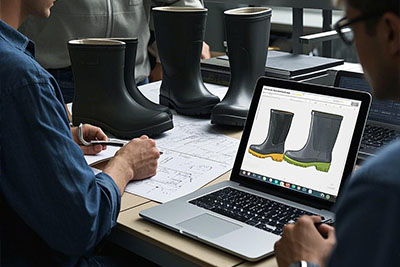
Der von Trenboo veröffentlichte OEM/ODM-Prozess beginnt mit der Definition der Stiefelanwendung, gefolgt von der Auswahl des Schuhleistens und der Laufsohle, der Materialbestätigung, der Farb- und Logoentwicklung sowie der Bestätigung der Musterkosten und der Lieferzeit.
Das angegebene Ziel ist die Bereitstellung eines präzisen, kundenspezifischen Musters innerhalb von ca. 15 Tagen. Bei Bedarf ist eine zusätzliche Korrekturrunde möglich. Nach der endgültigen Musterfreigabe und Anzahlung beträgt die Produktionszeit für entsprechende OEM/ODM-Projekte bis zu 45 Tage. Für einzelne Arbeitsprogramme kann die Produktionszeit nach Musterfreigabe ca. 30–40 Tage betragen. Daher sollte die projektspezifische Lieferzeit stets in der Bestellung festgelegt werden.
Kontrollen bei Großbestellungen vor der Produktion
Vor Produktionsbeginn sollten die Einkaufsteams das Goldmuster, die Stückliste, die Größentabelle, den Farbstandard, die Sicherheitskomponenten, das Artwork, den Verpackungsnachweis, die Kartonmarkierungen, die Prüfkriterien, den Produktionszeitraum, den Versandtermin und die Verfahren für nichtkonforme Produkte festlegen.
Bei Private-Label-Projekten für Bergbauschuhe können die Beschaffungsteams den OEM/ODM-Entwicklungsprozess für Gummistiefel von Trenboo prüfen, bevor sie eine technische Angebotsanfrage erstellen.
Verwandte Produkte für Programme für Bergbau- und Industrieschuhe
Sicherheitsstiefel für den Bergbau bei nassen und felsigen Arbeiten
Für allgemeine Beschaffungsvorgänge im Bergbau, Wasserdichte Gummistiefel mit Stahlkappe für den Bergbau, geeignet für anspruchsvolle industrielle Anwendungen Bereitstellung einer Referenzkonfiguration mit Obermaterial aus Gummi, Neoprenfutter, rutschfester Gummilaufsohle, Stahlkappe und durchtrittsicherer Zwischensohle.
Diese Art von Konstruktion ist dort relevant, wo Wasser, Schlamm, abrasive Oberflächen, Aufprallgefahren und scharfe Trümmerteile zusammen auftreten.
Ölbeständige Bergbaustiefel für Verarbeitungsumgebungen
Wenn Ölexposition oder aggressive industrielle Bedingungen Teil des Risikoprofils sind, stellen öl- und säurebeständige Gummisicherheitsstiefel für den Bergbau bei schweren industriellen Arbeiten eine weitere Produktreferenz dar.
Die veröffentlichte Konstruktion umfasst ein Obermaterial aus Gummi, ein Neoprenfutter, einen Zehenschutz aus Stahl, eine durchtrittsichere Struktur und eine rutschfeste Gummilaufsohle.
Isolierte Arbeitsstiefel für kalte und nasse Projekte
Für kalte, nasse industrielle Anwendungen bieten isolierte, wasserdichte Gummiarbeitsstiefel mit Sicherheitsschutz eine zusätzliche Option zum Vergleich von Neoprenkonstruktion, Isolierung, Zehenschutzsystemen und Anpassungsanforderungen.
Auch Unternehmen mit breiterem Anwendungsbereich im Industrie- und Outdoor-Bereich können die Gummistiefelkollektionen von Trenboo für die B2B-Beschaffung in Betracht ziehen. Produkte für den Outdoor- oder Nassarbeitsbereich sollten jedoch nicht die für den Bergbau zugelassenen Sicherheitsschuhe ersetzen, wenn die entsprechenden PSA-Vorschriften gelten.
Zugehörige Werkskapazität für die Lieferantenbewertung
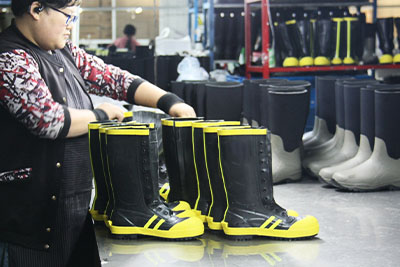
Fabrikgröße, Produktionskapazität und Exporterfahrung
Die Lieferantenbewertung sollte über das Erscheinungsbild des Produkts hinausgehen. Trenboo gibt eine Fabrikfläche von ca. 20,000 m², sechs Produktionslinien, rund 5.000 Paar Tageskapazitätund Exporte nach mehr als 50 Länder.
Das Werk verfügt über zwei interne Gummimischer, 13 Walzwerkmischer, vier Vulkanisiermaschinen sowie Laborgeräte, darunter ein Vulkanisationsrheometer, eine Zugprüfmaschine und eine Biegeprüfmaschine. Die Exportaktivitäten begannen 1999 und blicken somit auf eine lange Produktionsgeschichte für internationale Gummischuhprogramme zurück.
Zertifizierung und Qualitätskontrolle
Die Fabriklisten ISO 9001 Qualitätsmanagement-Zertifizierung und BSCI Die Zertifizierung umfasst die Einhaltung der EU-REACH-Chemikalienverordnung sowie der Anforderungen der EU-Verordnung 20345 (Stufe S5) für geeignete Sicherheitsschuhe. Produktspezifische Zertifikate und Prüfberichte müssen im Rahmen der Lieferantenqualifizierung weiterhin auf das jeweilige Bauvorhaben und den Zielmarkt abgestimmt werden.
Trenboo veröffentlicht fünf Stufen der Fabrikinspektion:
-
Eingangskontrolle der Gummifolien;
-
Online-Inspektion nach der Montage des Bootes;
-
Dichtigkeitsprüfung nach der Vulkanisation;
-
Inspektion während der Verpackung; und
-
AQL 2.5 Stichprobenprüfung nach dem Verpacken.
Dies bietet den Beschaffungsteams eine praktische Grundlage, um die werksseitige Qualitätskontrolle an die Inspektionsstandards von Drittanbietern oder an interne Abnahmestandards anzupassen.
Lieferung und Kundendienst
Die veröffentlichten Serviceinformationen umfassen Lieferkoordination und globale Logistikunterstützung. Trenboo gibt außerdem an, dass qualitätsbedingte Rücksendungen, die vom Lieferanten verursacht werden, durch den Kundendienst abgedeckt sind, einschließlich einer Entschädigung auf FOB-Niveau gemäß der veröffentlichten Richtlinie.
Bei Großaufträgen sollten Nachweise für Reklamationen, Reaktionszeiten, Ersatz- oder Gutschriftverfahren sowie die Verantwortlichkeit für Qualitätsabweichungen weiterhin im Kaufvertrag schriftlich festgehalten werden.
Einkaufsteams, die die Lieferantenqualifizierung durchführen, können Trenboos Angebot überprüfen. Fabrik für Gummistiefel und Produktionskapazität bevor wir vom Produktvergleich zur Musterentwicklung übergehen.
FAQ (häufig gestellte Fragen)
Was sollte eine Angebotsanfrage für Sicherheitsstiefel im Bergbau enthalten?
Eine entscheidungsreife Angebotsanfrage sollte Angaben zum Anwendungsbereich, zum Bestimmungsortstandard, zu den Ober- und Sohlenmaterialien, zur Schafthöhe, zum Futter, zum Zehenschutz, zum Durchtrittschutz, zu den Anforderungen an Rutschfestigkeit und Haltbarkeit, zur Chemikalienbeständigkeit, zum Größenbereich, zum Logo, zur Verpackung, zur Mindestbestellmenge, zum prognostizierten Volumen, zu den Inspektionsanforderungen und zu den Kriterien für die Musterfreigabe enthalten.
Wie sollte die Mindestbestellmenge für maßgefertigte Sicherheitsstiefel für den Bergbau bewertet werden?
Die Mindestbestellmenge (MOQ) sollte zusammen mit der Gummifarbmischung, den Sohlenformen, dem Größenbereich, den Schutzkomponenten, den Logowerkzeugen, dem Futter, der Verpackung und dem prognostizierten Auftragsvolumen bewertet werden. Eine projektspezifische Mindestbestellmenge liefert nützlichere Informationen für den Einkauf als eine einheitliche, werksweite Mindestbestellmenge.
Was sollte vor der Massenproduktion bestätigt werden?
Das endgültige genehmigte Muster, die Materialspezifikation, die Größenklassifizierung, die Sicherheitskomponenten, die Prüfanforderungen, das Logo-Design, die Verpackung, die Kartonkennzeichnung, der Qualitätsstandard, der Produktionsplan, der Inspektionstermin, die Versandanforderungen und der Änderungskontrollprozess sollten bestätigt werden.
Wie sollte ein Hersteller von Sicherheitsschuhen für den Bergbau bewertet werden?
Produktionskapazität, Exporterfahrung, Zertifizierung, Labortestmöglichkeiten, Gummimischung, Vulkanisationskontrolle, Dichtheitsprüfung, Probengenauigkeit, Endkontrolle, Produktionsvorlaufzeit, Rückverfolgbarkeit und Kundendienstverfahren sollten allesamt Bestandteil der Lieferantenqualifizierung sein.
Bezugsquelle für maßgefertigte Sicherheitsstiefel für den Bergbau bei Großbestellungen
Trenboo unterstützt B2B-Projekte für Gummistiefel im Bergbau und in der Industrie mit OEM/ODM-Entwicklung, die Materialien, Laufsohlen, Schutzkomponenten, Farben, Logos, Futter, Verpackungen und Private-Label-Anforderungen umfasst.
Für Händler, Importeure, PSA-Lieferanten und Marken für Arbeitskleidung, die Großbestellungen vorbereiten, können Einkaufsteams den OEM/ODM-Prozess von Trenboo prüfen, Optionen für Gummistiefel für den Bergbau und die Industrie vergleichen und Kontakt Trenboo um Mindestbestellmenge, Muster, Spezifikationen, Lieferzeit und Mengenangebote zu besprechen.

 konsultieren
 Die WhatsApp
 Nachricht hinterlassen
 oben
oben