




Related news
-
How Does a Leading Rubber Boot Manufacturer Produce High-Quality Rubber Rain Boots?
-
How Do Print Rubber Boots Combine Chinese Symbolism with Modern Rainwear?
-
What Makes Molded Rubber Outsoles Essential for Rain Boot Durability and Performance
-
What Is a Rubber Boot with an Internal Gusset — and Why Does It Matter?
How Does a Leading Rubber Boot Manufacturer Produce High-Quality Rubber Rain Boots?
Introduction to Rubber Boot Manufacturing
Rubber boot manufacturing forms a key part of the footwear world. It focuses on items like rubber rain boots. These need strong waterproofing and toughness. A skilled rubber boot manufacturer turns raw natural rubber into useful, weather-proof shoes. The work happens through exact steps. Rubber rain boot factories mix modern machines and trained workers. They keep quality steady from start to finish.
This path shows the skill in rubber boot production. It also points to changes in materials and methods. Modern rubber rain boots work well outdoors and in tough jobs. Learning about rubber boot manufacturing explains their strength in bad weather. It mixes old ways with new ideas in rubber rain boot factories.
Take a Video Tour of Our Factory
The Historical Evolution of Rubber Boot Manufacturing
The start of rubber boot manufacturing goes back to the 19th century. Natural rubber came from the Hevea brasiliensis tree. South American groups, like the Olmecs, used latex sap over 3,000 years ago. They made waterproof layers. This set the base for today’s uses. A big step came in 1839. Charles Goodyear found vulcanization by chance. He heated rubber with sulfur. This made it stretchy and strong. By 1853, Hiram Hutchinson sold this for shoes in France. He made the first vulcanized rubber Wellington boots. This changed rubber boot manufacturing. The boots became fully waterproof and sturdy.
After World War I, rubber rain boot factories grew fast. They met army needs for trench shoes. This locked their place in farming and work. Now, rubber boot manufacturers run advanced plants. Many hold ISO 9001 for quality control. In North China, factories from 1958 have changed. They went from simple black harvest wellies to bright, custom rubber rain boots for the world. This growth in rubber boot manufacturing shows a move to green ways. Certifications like GRS for recycled items keep rubber rain boot factories earth-friendly.
Key Materials in Rubber Boot Production
The core of rubber boot manufacturing is picking materials wisely. They decide how the product performs. Natural rubber is the main base. It is valued for flex and breakdown in nature. It often makes up to 60% of top compounds in rubber rain boots. Makers add fillers and boosters like calcium carbonate. This is a fine white powder from limestone. Calcium carbonate cuts costs. It raises pull strength, wear resistance, and ease of shaping. It lowers thickness for simple molding. This helps rubber boot factories work fast.
Sulfur is the key vulcanizing agent. It links rubber parts. This adds toughness and heat hold. It stops stickiness in heat or cracks in cold. Dyes and pigments add color. Titanium dioxide gives cover. Bright colorants match Pantone standards. This lets rubber boot manufacturers make plain black work boots or fun kids’ wellies. Other helpers like zinc oxide speed things up. Stearic acid keeps mix even. In current rubber boot manufacturing, these blend in set amounts. Often 5-10 parts per hundred rubber (phr) for calcium carbonate. This balances price, power, and green effects. Rubber rain boots stay cheap and solid.
Step-by-Step Rubber Boot Manufacturing Process
Rubber boot manufacturing happens in many stages. They occur in special rubber rain boot factories. Each step is set for accuracy and size.
Rubber Mixing Workshop: Compounding the Base
It starts in the rubber mixing workshop. Raw natural rubber sheets go into mixers and mill machines. Calcium carbonate, sulfur, dyes, and speeders join bit by bit. This makes a smooth compound. The step takes 10-15 minutes per batch. It spreads everything evenly. This avoids weak areas in rubber rain boots. Top rubber boot factories use auto controls. They hold heat at 60-80°C. This stops early vulcanization. The “masterbatch” cools and waits for sheeting.
Forming the Boot Shape: Cutting and Lasting
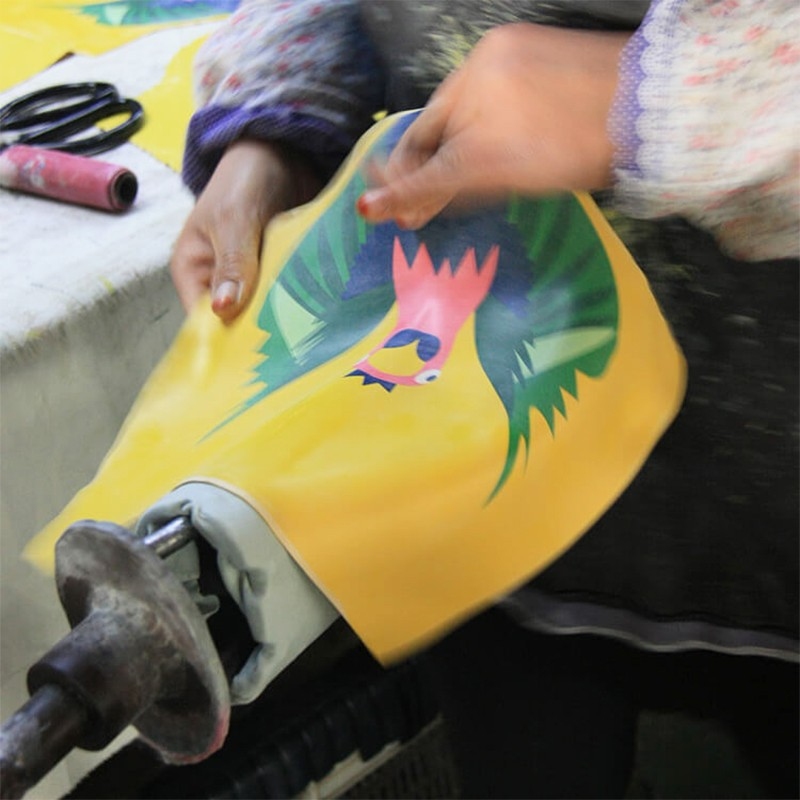
Next, the compound rolls into thin sheets. They are usually 2-5 mm thick. Dies cut them into upper parts and linings. In rubber boot manufacturing, sheets wrap over hot metal lasts. These copy foot shapes for grown-ups, kids, or special fits. Workers add layers like cotton or neoprene for warmth. They build the boot form. This hand work is common in fine rubber rain boot factories. It allows details like gussets or buckles. This gives a tight fit. It boosts waterproofing.
Surface Preparation: Spraying and Assembly
After shaping, varnish or release sprays cover the boot. This helps smooth curing and gloss. For boots with separate outsoles, a glue line joins vulcanized rubber or EVA soles to uppers. Adhesives hold them. This makes mixed designs for better grip. The step matters in rubber boot factories. They make safety boots that meet EU 20345 S5 rules. Slip hold is vital there.
Vulcanization: The Curing Crucible
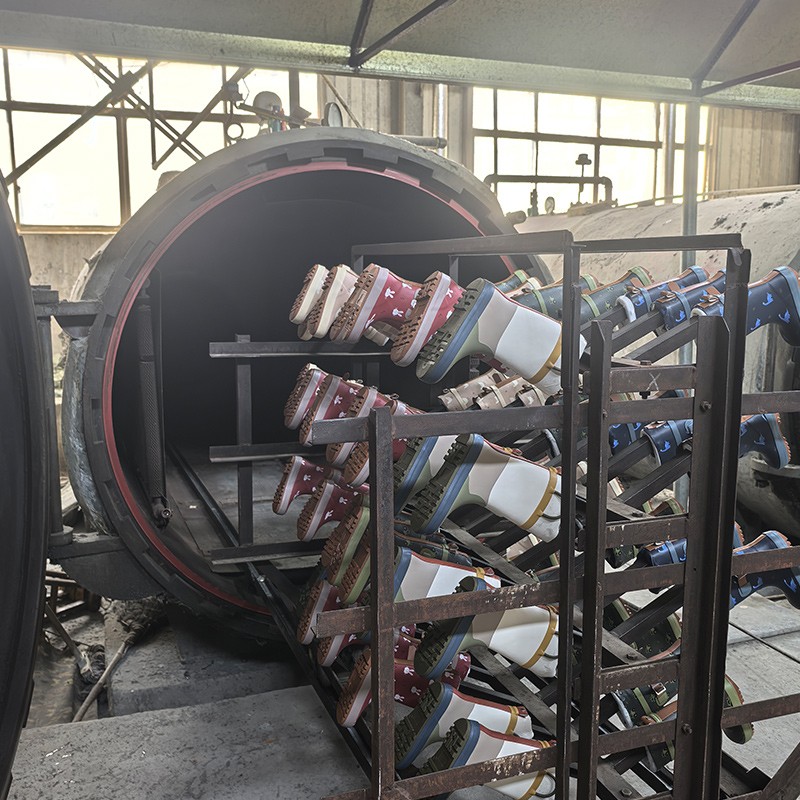
Vulcanization shapes rubber boot manufacturing. Uncured boots go into high-pressure autoclaves or vulcanizers. Heat reaches 140-160°C for 10-20 minutes. Sulfur builds cross-links. It turns soft material tough and bouncy. It fights wear and keeps form. Gains include pull strength up to 20 MPa. Water take-in stays low. This suits rubber rain boots. Factories with many vulcanizers make 5,000 pairs daily. They tweak times for boot type. This ensures even cure.
Outsoles and Finishing Touches
Many rubber rain boot factories cure outsoles right onto uppers. This joins without seams. But glued types get separate bonding. Finishing cuts extra material. It smooths edges. Rollers add textures like leather or diamond looks. This raises beauty in custom rubber boot production.
Rigorous Quality Control in Rubber Rain Boot Factories
Quality checks run through rubber boot manufacturing. They guard against flaws in rubber rain boots. Leak tests put boots in water under pressure. Bubbles show tiny holes. Eye checks look for cracks, odd colors, or seam issues. Physical tests use rheometers for cure speed, pull testers for strength, and bend machines for wear. They meet ISO and REACH rules. Defect rates stay under 1%. This comes from live checks and end sampling. In certified rubber boot factories, BSCI audits check fair work. Green tests prove hold against oils and UV. This makes rubber rain boots trusty worldwide.
Customization and Innovation in Rubber Boot Manufacturing
Top rubber boot manufacturers shine in ODM and OEM work. They fit rubber rain boots to client needs. Choices cover upper thickness, Pantone-matched dyes, and linings like RPET for green or polar fleece for heat. Output starts at 800-pair minimums. Samples come in 15 days. Patented molds allow unique lasts. New ideas like sports-shoe comfort mix use and look. This sets rubber boot factories as brand partners.
The Enduring Craft of Rubber Rain Boots
Rubber boot manufacturing blends old skill and new exactness. It creates rubber rain boots that beat weather. From mixing key items like calcium carbonate and sulfur to vital vulcanization, each part in rubber rain boot factories adds top waterproofing, strength, and use. As need rises for green, custom choices, rubber boot manufacturers keep improving steps. They make these key shoes stay needed.
Frequently Asked Questions (FAQ)
Q1: What materials are used in high-quality rubber rain boots?
A1: Natural rubber, calcium carbonate, sulfur, dyes, pigments, and additives like zinc oxide and stearic acid.
Q2: How are rubber rain boots made waterproof and durable?
A2: Through vulcanization, layering, proper mixing, and reinforced outsoles.
Q3: Can rubber rain boots be customized?
A3: Yes. Options include upper thickness, lining material, colors, and outsole types.
Q4: What quality control measures ensure reliable rubber boots?
A4: Leak tests, visual inspections, pull strength tests, bend tests, and compliance with ISO and REACH standards.
Q5: What are common uses for rubber rain boots?
A5: Outdoor work, farming, city wear in wet conditions, and safety applications.
Q6: How long does it take to produce a sample of custom rubber rain boots?
A6: Typically 15 days from mold to sample.
Partner With Trenboo for Custom Rubber Rain Boots
For a solid partner in rubber boot manufacturing, Trenboo offers full ODM and OEM solutions. As a vulcanized rubber boot factory, Trenboo produces high-quality men’s, ladies’, and kids’ outdoor welly boots, fashion rain boots, as well as safety work boots. They have proven quality and fresh ideas. Contact Trenboo now at yori@wellies.cn to discuss custom rubber rain boot projects and elevate production capabilities.

 consult
 WHATSAPP
 leave message
 top
top