Related news


Rubber Rain Boot MOQ Guide: How Factories Set Minimum Orders
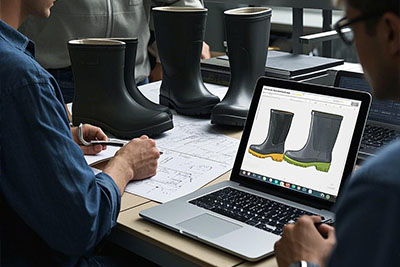
Minimum order quantity (MOQ) is the minimum production volume required by a factory based on material purchasing, production setup, labor efficiency, inspection requirements, and supply-chain conditions. For importers, distributors, private-label companies, and sourcing teams, MOQ affects landed cost, cash flow, product differentiation, and reorder planning. Trenboo is a rubber rain boot manufacturer and OEM/ODM supplier supporting wholesale rubber boots, private-label programs, and custom footwear projects for international B2B markets.

What Determines a Rubber Boot Factory’s MOQ?
Raw Materials and Supplier Minimums
Custom rubber colors require pigment preparation, compound mixing, milling, shade approval, and machine cleaning. A specified base color normally starts at 800 pairs, so dividing one design across several colors can create separate material minimums. MOQ requirements often start with material purchasing decisions before production begins.
Outsoles, linings, neoprene, buckles, labels, printed films, boxes, and inserts may also have supplier MOQs. When order volume is lower than an upstream minimum, the factory must purchase excess stock, reserve leftover materials, or include the additional cost in the unit price.
Production-Line Efficiency
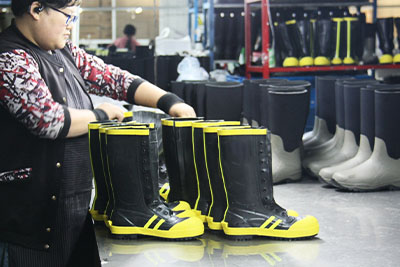
Production capacity varies by construction. As a general production reference, some programs may produce approximately 800 pairs per day for neoprene hunting boots, 1,000 pairs for fashion rain boots, and 1,500 pairs for children’s wellies. Actual output depends on product construction, production scheduling, and customization requirements. Short runs still require lasts, dies, molds, workstation setup, quality standards, and packaging instructions.
Below-MOQ orders may be accepted at a higher FOB price. The premium covers material overbuying, line changeovers, reduced worker efficiency, and additional labor and handling costs.
Buyer Considerations Before Placing a Rubber Boot Order
Material and Product Decisions
Material selection should match the intended market. Natural-rubber uppers support flexible waterproof boots. Neoprene provides insulation and stretch for hunting, fishing, and winter programs. Cotton-polyester lining suits general rainwear, while fleece or wool-blend options support colder conditions. Molded rubber outsoles are suitable for outdoor and safety applications; lightweight EVA combinations suit casual footwear.
Design decisions can introduce new MOQs. A private shoe last affects fit and tooling, while a custom outsole requires mold development. Exclusive colors, textures, trims, lining prints, and retail packaging may each create separate purchasing thresholds.
Bulk-Order Planning
A bulk order of rubber rain boots should define quantity by style, color, size, and destination. Sizes can usually be combined within one style-color MOQ, but unrelated styles may not be consolidated when they use different lasts, soles, compounds, or linings.
For an initial program, one core construction, one or two validated colors, and a disciplined size ratio can reduce inventory risk. Freight efficiency, duties, warehousing, expected sell-through, and reorder lead time must also be considered.
OEM/ODM Considerations
Customization, Logo, and Packaging
Customization can include Pantone-matched rubber, upper overlays, transfer-film printing, textures, matte or glossy finishes, outsole construction, shaft height, lining, and packaging. Logos may be placed on the upper, outsole, top band, or pull tab. Molded logos and branded textures generally require tooling, while printed labels or existing logo positions can be more economical.
Packaging options include export cartons, private-label shoeboxes, inserts, barcodes, carton marks, and FSC-certified boxes. Carton dimensions should be approved before freight calculations because packing efficiency affects landed cost.
For private label rain boot projects, buyers can review Trenboo’s OEM/ODM process and rubber boot collections before preparing an RFQ.

Sample Approval and Production
A complete brief should identify application, materials, last, outsole, color, size range, logo artwork, packaging, compliance requirements, quantity, and delivery date. Sample confirmation should cover fit, dimensions, color, surface finish, waterproofing, outsole adhesion, tread, logo accuracy, and packaging.
The OEM development process may include sample development within approximately 15 days, followed by revision, approval, and bulk production stages depending on project requirements. After final confirmation and a 30% deposit, mass production may take approximately 45 days, depending on material availability, production planning, and project complexity.
Before releasing a bulk order, procurement teams should confirm the signed sample, specification sheet, size ratio, inspection standard, payment terms, Incoterms, shipment plan, carton marks, and defect-claim procedure.
Factory Capability and Procurement Trust
Scale, Export Markets, and Certifications
The manufacturing site covers 20,000 square meters and operates six production lines with around 5,000 pairs of daily capacity. Factory resources include rubber mixers, mill mixers, vulcanizers, air-compression equipment, and laboratory instruments.
Products have been exported to more than 50 countries, including the United States, Canada, the United Kingdom, Germany, France, Italy, Japan, Australia, and Singapore. Published qualifications include ISO 9001, BSCI, EU REACH conformity, and capability for EN ISO 20345 S5 safety footwear requirements. GRS-certified recycled fabrics and FSC-certified shoeboxes are available for relevant projects.
Quality Control and After-Sales Support
Quality control follows five stages: incoming rubber-sheet inspection, in-line inspection after assembly, leak testing after vulcanization, packaging-line inspection, and final AQL 2.5 sampling. Laboratory equipment includes a vulcanization rheometer, tensile tester, and flexing tester.
The factory states that logistics support is available and that factory-caused qualified returns can be compensated at FOB value under its quality guarantee. Purchase agreements should define warranty scope, evidence requirements, claim timing, and settlement terms.
Rubber Rain Boot Categories for Wholesale and OEM Projects
Product Categories by Commercial Application
Kids wellies are suitable for seasonal retail collections, school rainwear programs, and promotional footwear projects. Available customization options include handles, gussets, prints, reflective details, and decorative patches.
Women’s rain boots are designed for fashion retailers and private-label brands, including Chelsea, ankle, mid-calf, tall, heeled, wide-calf, and foldable styles.
Adult outdoor wellies for distributors cover hunting, fishing, gardening, riding, neoprene, winter, and work applications.
Foldable barefoot rain boots can support travel and outdoor footwear programs, with customization options including logos, sole patterns, colors, lining, height, and packaging.
Safety rubber boots for industrial procurement provide an option for construction, manufacturing, logistics, and wet working environments.
FAQ
What Is the Standard MOQ?
A common MOQ reference is around 800 pairs per color per style, depending on the product category, materials, customization requirements, and production planning. Lower quantities may be reviewed case by case and can carry a higher unit price.
What Should an RFQ Include?
An RFQ should include the destination market, application, materials, colors, size range, quantity by size, logo method, packaging, test requirements, target FOB price, delivery window, annual forecast, and destination port.
Can Several Styles Be Combined?
Combination is practical only when styles share materials, colors, lasts, outsoles, and production processes. Different constructions normally retain separate MOQs.
What Must Be Approved Before Mass Production?
The final sample, technical specification, Pantone references, logo artwork, size chart, packaging files, inspection criteria, delivery date, and commercial terms should be approved in writing.
Work with a Rubber Rain Boot Manufacturer
Trenboo is a rubber rain boot manufacturer and OEM/ODM supplier supporting material selection, custom development, sampling, bulk production, quality inspection, and logistics services for global buyers.
For your next rubber boot project, submit your product specifications through the Contact page to receive an MOQ assessment, sample plan, and quotation from our team.

 consult
 WHATSAPP
 leave message
 top
top