



Types of Safety Boots and How to Choose the Right Work Boots for Every Job
Introduction
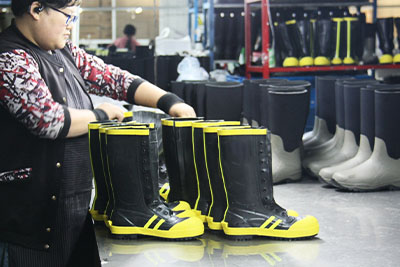
Workplace foot injuries continue to be a big problem in many industries. Thousands of cases happen each year. These accidents often cause lost workdays. Safety boots act as key protective gear. They shield feet from impact, compression, slips, punctures, water, and electrical dangers. Different kinds handle particular risks in construction, mining, forestry, manufacturing, and other tough fields. This guide looks at usual categories of safety boots. It covers main protective features and important points for picking them in work settings. Businesses that want dependable rubber-based choices frequently work with specialized manufacturers like Trenboo. Trenboo is a leading factory and supplier of high-quality waterproof and safety work boots.
Common Types of Safety Boots and Their Applications
Safety boots appear in many styles. Each style fits certain workplace risks. Every kind focuses on some protections. At the same time, the boots keep good strength and usefulness.
Steel Toe Safety Boots
Steel toe safety boots have strong reinforced caps. These caps stand up to heavy objects that fall. They also resist strong squeezing forces. Construction and manufacturing industries often use these boots. Workers need them for solid impact protection. Rubber versions mix steel toe safety with complete waterproofing. So steel toe waterproof rubber boots work well on wet job sites.
Composite Toe Safety Boots
Composite toe safety boots use non-metal materials. Examples include carbon fiber or modern plastics for toe safety. These choices weigh less than steel ones. The lighter weight helps workers who need to move a lot for long periods. Composite styles usually blend smoothly with rubber uppers. This gives waterproof and slip-resistant ability in different situations.
Metatarsal Guard Safety Boots
Metatarsal guard safety boots give extra cover over the top of the foot. This goes beyond normal toe caps. Places with strong impacts, such as warehouses and busy assembly lines, use these boots. They lower the chance of breaks from falling tools or items. Rubber builds improve total toughness in hard industrial places.
Waterproof and Insulated Safety Boots
Waterproof and insulated safety boots stop water from getting inside. They also keep feet warm in cold or damp areas. Workers outdoors in utilities, agriculture, and construction count on these boots. The boots help avoid pain from long time in bad weather. Many use rubber materials for excellent water blocking.
Electrical Hazard (EH) Safety Boots
Electrical hazard safety boots include special non-conductive parts in soles and build. These parts block electrical shocks. Electricians and people near high voltage need these boots for basic safety. Rubber-based EH styles give steady results in risky electrical work areas.
Slip Resistant and Anti-Puncture Safety Boots
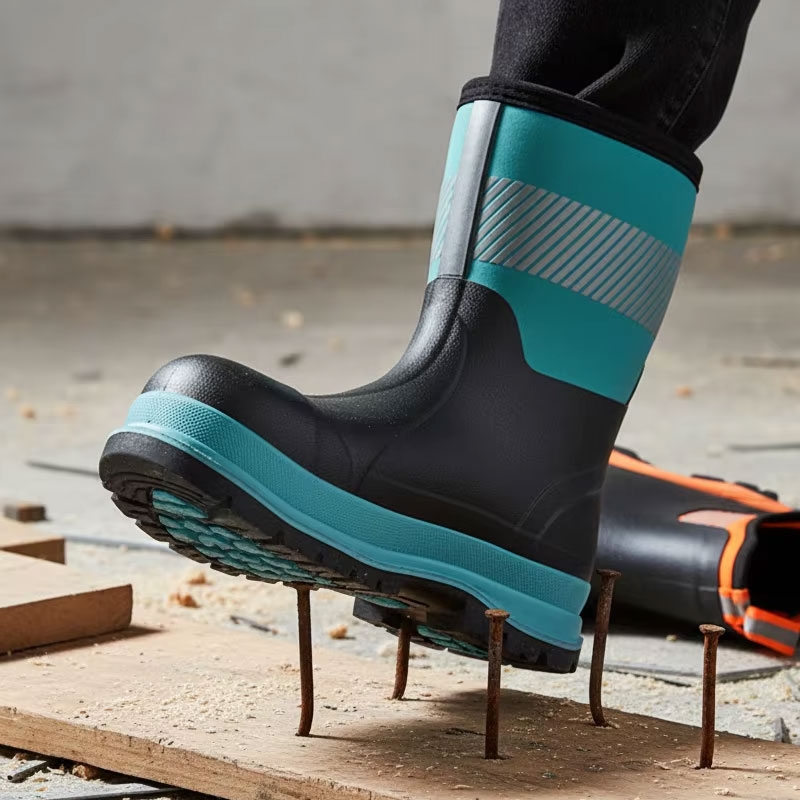
Slip resistant rubber safety boots have special outsoles. The outsoles give good hold on oily, wet, or rough ground. Industrial non-slip waterproof safety work boots cut down fall dangers in manufacturing and processing plants. Anti-puncture safety gumboots for forestry have strong midsoles. These midsoles protect against pointed things like thorns or waste.
Chemical Resistant Safety Boots
Chemical resistant safety boots use tough rubber mixes. These mixes handle oils, acids, solvents, and other harsh stuff. Workers in petrochemical, laboratory, and manufacturing sites rely on these boots. The boots offer extra defense from chemical splashes and soaking. Rubber mixes in the designs stay strong during long contact with dangerous liquids.
Anti-Static and ESD Safety Boots
Anti-static safety boots release built-up static electricity. They do this through conductive soles and materials. This stops sparks in delicate areas. Electronics assembly, explosive places, and cleanroom work use these boots. The boots protect gear and work steps. Rubber-based ESD types mix static control with waterproofing. This makes them useful in many industrial jobs.
Heat Resistant Outsole Safety Boots
Heat resistant outsole safety boots use special rubber mixes. These mixes stand hot surfaces without melting or breaking down. Foundries, metalworking, and high-heat processing spots need these boots. They guard feet from heat rays and straight touch. Strong builds keep them lasting in very hot conditions.
Key Features to Consider in Rubber Safety Boots
Protective footwear includes several qualities. These qualities improve safety and ease of use in work tasks.
Toe Protection Options
Toe protection stays very important. Steel, composite, or aluminum caps deal with impact and squeezing risks. Steel toe choices give outstanding power for heavy jobs.
Outsole Design for Traction and Resistance
Outsole patterns with deep grooves and special mixes offer great slip resistance. Slip resistant rubber safety boots do well on dirty floors. Such floors appear often in industrial spots. Oil-resistant and heat-resistant outsoles bring more safety for certain dangers.
Waterproof and Chemical Barrier Construction
Waterproof builds use vulcanized rubber uppers. These uppers close out liquids. Waterproof safety boots for construction keep feet dry in rain or spills. Chemical-resistant rubber layers act as shields against strong materials.
Additional Protective Elements
Anti-puncture midsoles and metatarsal guards bring added defense in risky work. Electrical insulation in EH-rated boots protects from voltage. Anti-static features stop electrostatic discharge in controlled places.
Comfort and Durability Elements
Cushioned insoles, arch support, and moisture-wicking linings help with comfort all day. Tough rubber materials fight wear and lengthen boot life in rough settings. Flexible rubber uppers allow easy movement. They do not lose safety.
How to Select the Appropriate Safety Boots for Specific Work Environments
The selection process needs careful review of job needs and dangers.
Assess Workplace Hazards and Industry Requirements
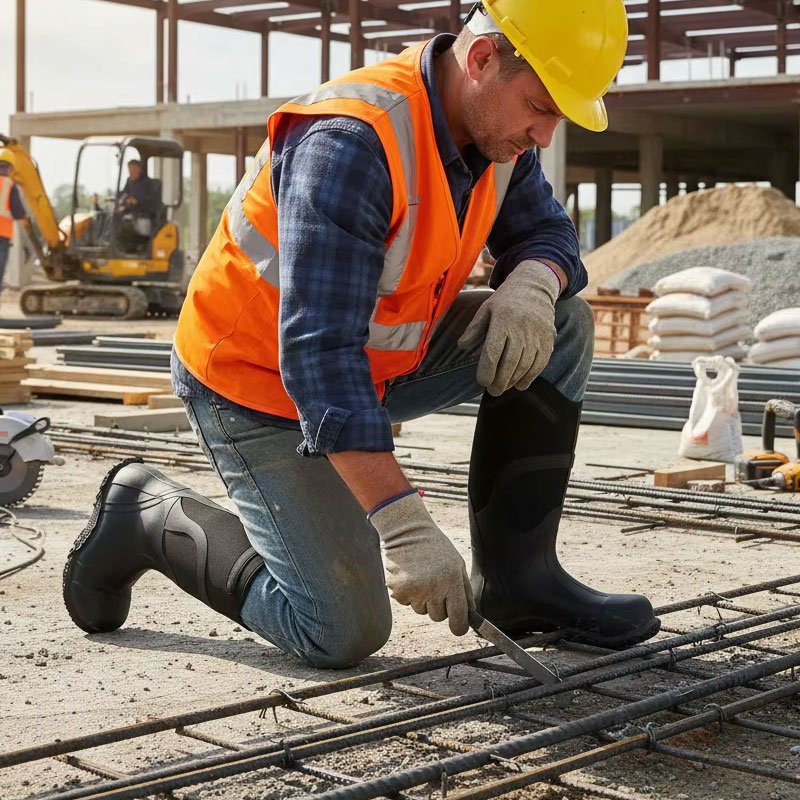
Workplace dangers decide boot picks. Construction sites usually require waterproof safety boots for construction with impact safety. Mining sites prefer steel toe waterproof rubber boots for mining. These handle heavy weights and wet areas underground. Oil and gas places focus on chemical resistant and slip resistant rubber choices. They suit fuel and slick ground.
Prioritize Fit, Comfort, and Long-Term Durability
A good fit keeps boots stable. It also lowers tiredness. Boots with ergonomic form and support handle long work hours. Strong builds resist repeated bad weather and hits.
Balance Protection Levels with Practical Needs
Protection must match real risks. It should avoid extra weight. Lightweight composite choices fit jobs that need quick moves. Heavy-duty rubber styles work for very tough settings.
Industry-Specific Recommendations
Different fields gain from custom safety footwear.
Construction and Heavy Industry
High top construction work safety boots give ankle support. They also offer strong protection on building sites.
Mining and Forestry Operations
Steel toe waterproof rubber boots for mining and waterproof anti-puncture logging work boots for forestry handle ground dangers and impacts.
Electrical and Chemical Environments
Industrial 30KV electrical insulation safety boots give needed protection in power jobs. Chemical resistant rubber boots guard in labs and processing plants.
Oil and Gas Industry
Oil and gas safety boots with chemical-resistant rubber and slip-resistant outsoles manage fuels, oils, and slippery platforms well.
General Industrial Settings
Heavy duty rubber safety shoes for industrial workers provide flexible protection in many facilities.
Conclusion
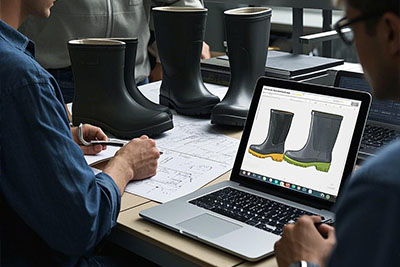
Safety boots create a main shield against foot dangers at work. Their types and features fit certain risks. This gives the best safety and results. Industries gain from solid rubber-based styles. These combine waterproofing, slip resistance, impact protection, chemical resistance, and more. Businesses looking for top choices go to Trenboo. Trenboo is a dedicated manufacturer, supplier, and factory. The company focuses on custom rubber safety work boots and rain boots for global B2B partners.
FAQ
What are the main types of safety boots used in industrial settings?
Common types include steel toe, composite toe, metatarsal guard, waterproof insulated, electrical hazard, slip resistant anti-puncture, chemical resistant, anti-static, and heat resistant outsole varieties. Each one handles different dangers.
How do waterproof safety boots benefit construction workers?
Waterproof safety boots for construction stop moisture problems. They keep comfort in wet places. They also give needed protective features.
Why choose slip resistant rubber safety boots?
Slip resistant rubber safety boots lower fall risks on slick ground. They use special outsoles. This improves steadiness in industrial workplaces.
What makes steel toe waterproof rubber boots suitable for mining?
Steel toe waterproof rubber boots for mining mix impact resistance with full waterproofing. They manage heavy things and wet conditions underground.
How can businesses source custom safety boots?
Businesses work with manufacturers that offer OEM/ODM services. These services provide tailored designs, materials, and features. They meet exact work needs.
Partner with Trenboo for Custom Safety and Rain Boot Solutions
Businesses that need high-quality rubber safety work boots, waterproof designs, or custom industrial footwear gain from working with Trenboo. As an established manufacturer, supplier, and factory, Trenboo offers OEM/ODM customization. This includes material formulations, protective features, branding, and bulk production for wholesalers, distributors, and brands. Contact Trenboo today to talk about project needs. Request samples or get quotations for reliable, durable solutions made for professional demands. Visit https://www.trenboot.com/ to see what they offer and start working together.

 consult
 WHATSAPP
 leave message
 top
top