






What Are Rubber Deck Boots—and Why Is the Special Siping Sole So Effective?
Introduction
In marine and fisheries settings, footwear must perform under the most challenging conditions: water, salt, motion, and continuously slippery surfaces. That is where rubber deck boots come into focus—footwear engineered for sailors, anglers and crew who spend long hours on wet decks. Among the features that set them apart, the specialized sole design—sometimes called the siping or “grooved” outsole—is critical.Click here to watch the product demo video

What is Rubber Deck Boots
“Deck boots” usually means strong boots built for use on boats, ships, or fishing boats. There, the deck is often damp, smooth, and shifting.
Some main points:
The top part uses rubber (or rubber-like fake material). It gives complete waterproof cover and tough fight against salt mist, wave splashes, and deck cleaning water.
The bottom is non-marking. So it avoids leaving scratch marks on boat decks. It also resists slips. Often, the bottom is flat or almost flat. Not high heels or rough patterns.
The side parts of a deck boot include firm ankle hold, closed shape to block water from top entry, and sometimes fast-drain or quick-dry features. For fishing jobs or deck tasks, these boots keep feet dry, steady, and safe.
So, rubber deck boots mix waterproof cover, guarding top, and a special outsole built for grip on wet decks.
Why Traction Matters—and the Role of the Siped / Grooved Sole
When someone walks on a damp boat deck, it could be steel, aluminum, fiberglass, or wood with water and mist. The danger is not only slipping but quick loss of balance. Even simple steps can cause trouble. Thus, the outsole shape is very important. One of the early ideas in this field is the “siped” sole. That means lots of thin cuts near each other. They are often made in natural rubber. This lets water move away fast. And the pattern grabs the surface.
How it works in real use
When the boot touches the wet deck, water sits under the bottom.
The grooves create paths for water to leave. This cuts down hydroplaning. That is, the boot riding on a thin water layer.
Natural rubber is bendy. It can shape to tiny deck bumps. This grows the touch area.
The mix of flat or nearly flat bottom shape plus many thin grooves stops pressure on just a few high spots. Those might slip. Instead, it spreads pressure even. And it pushes water out.
In actual deck checks, boots with sharp-cut multi-direction siping beat basic flat ones in wet grip. For instance, one sea-boot test noted that “their razor-cut, multi-directional siping performed well on wet surfaces.”
Why “flat” sole matters
Many outdoor boots have deep rough bumps for mud or loose ground. But on a boat deck, you need a flat sole or low shape. Because:
Deep bumps can hook on deck parts, ropes, or uneven spots.
A flat sole gives more touch area with the deck. This helps with water layers.
With shallow grooves, a flat sole moves water out well. It keeps balance. And it avoids uneven push.
Thus, the “sperry-sole” type explained—a natural rubber, flat shape, thin close grooves—is best for ocean deck settings.
Key Features of Rubber Deck Boots for Marine Use
a) Waterproofing & Upper Material
Rubber deck boots must stop water from getting in. This includes from the deck like spray or cleaning. And from rare waves or foot areas. A full molded rubber top or rubber-mix top with sealed edges and waterproof build works best.
In cold weather, some boots add neoprene inside or a mix rubber/neoprene style. This gives warmth and good fit. But the outer part stays waterproof.
b) Sole Construction – Natural Rubber & Siping
As talked about, the sole needs natural rubber or top fake rubber mix. It offers bend and better stick when wet. The sole must have siped or tiny-grooved pattern. It should be thick with many thin grooves close. And shallow, not deep spikes. The flat sole works for deck areas. Not deep bumps that cut touch and add wobble.
Some makers call soles with “razor-cut wave-siping” or “razor-cut multi-directional siping” for wet grip.
c) Non-Marking Outsole
On boats, decks like shiny wood, painted aluminum, or fiberglass can get hurt or marked by rough rubber soles. Good deck boots use non-marking rubber mix. So no scratch marks or rubber lines stay on the deck. Many sailing shoes note “non-marking” soles.
d) Fit, Height & Draining
The boot height should guard the ankle and lower leg. But not too high to limit movement. Some are ankle level. Others reach mid-calf.
Easy put-on and take-off helps a lot. Especially on boat decks where time and steady stand count. Some boots have drain holes or fast-dry insides. So if water gets in from top, it leaves or dries quick. One rubber deck-boot note points to a light bendy rubber type with take-out insole for faster dry.
e) Comfort & Shock Absorption
Safety comes first. But comfort matters too. Especially for long deck time. Some boots add foot pads with EVA or like soft materials.
f) Durability & Marine Condition Resistance
Ocean spots bring saltwater, mist, UV light, and rub from deck gear. The rubber cover and outsole must fight rub, salt damage, sun fade, and keep working long.
Why Rubber Deck Boots with Siped Soles Are Preferred for Fishing & Boating
Adding all the points, rubber deck boots with siped soles give clear wins for ocean users. Like fishers, deck teams, boat drivers, and far-sea workers:
Slip-resistance on wet decks: The thick groove setup pushes water away. The flat rubber face grows touch. And the natural rubber mix boosts stick. Not slide on water film.
Waterproof protection: The rubber top blocks water from decks, mist, or splashes. Key when decks stay wet or waves hit back areas.
Stability & safety: In ocean areas, steady stand is not just nice but safe. A slip can cause bad hurt. The boot’s sole helps keep grip on wet, moving floors.
Durability in salt-water environment: Rubber fights salt. It rinses off easier than cloth boots. The build fits tough ocean spots better.
Ease of cleaning & maintenance: Rubber rinses and dries much simpler than fabrics or leathers in ocean work.
Versatility for fishing and boat deck work: As one fishing boot guide says, top features include waterproof build and slip fight.
Selecting the Best Rubber Deck Boots: What to Evaluate
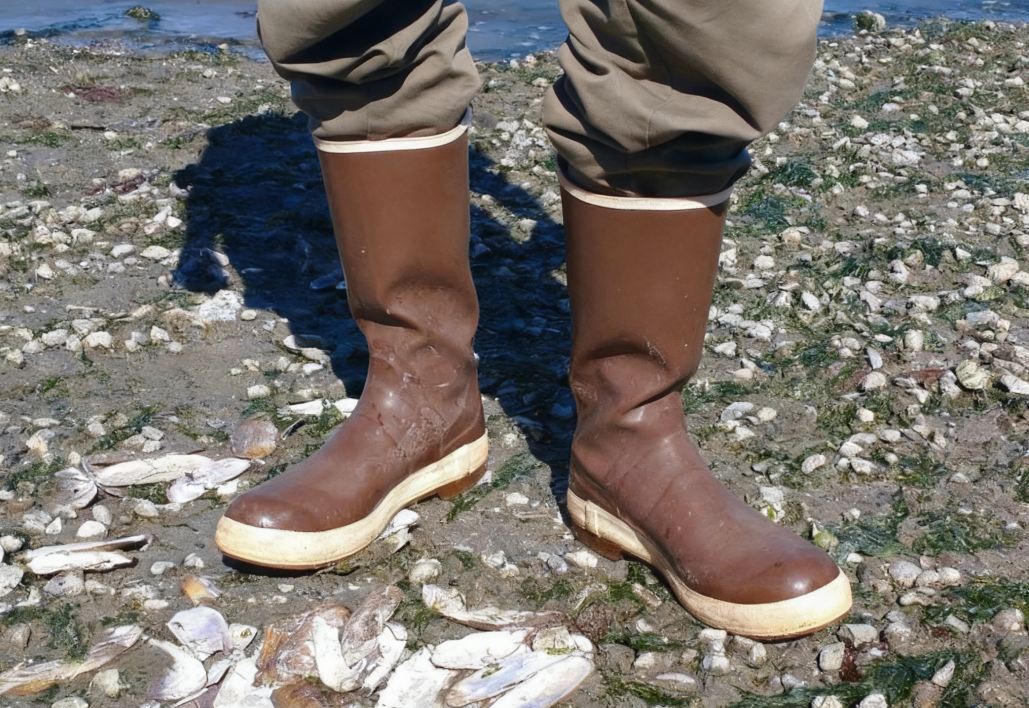
When picking top rubber deck boots or best boat deck rubber boots for work or serious ocean use, this list can guide:
Upper material & waterproof certification: Make sure the boot is full waterproof. Not just resistant. With sealed edges.
Sole design: Seek flat shape with thick, shallow, close grooves like siping. Skip deep rough bumps. They can hurt on smooth wet decks.
Rubber compound: Natural rubber or high-grip rubber is best for wet stick.
Non-marking outsole: Very key in boat decks to guard finishes.
Fit & mobility: The boot should let easy ankle bend. Quick put-on and off. Since ocean jobs often mean movement.
Comfort elements: Think of boots with soft foot pads like EVA. Take-out insoles for dry. And air collars if useful.
Drainage/quick-dry features: If the boot gets full water, parts that help dry or drain are good.
Durability & serviceability: Ocean spots are hard. Ensure the boot handles salt-mist, UV, rub, and often rinse.
Size/Ankle height trade-off: Taller boots give more splash guard. But may cut movement. Pick by boat type and weather.
Maintenance ease: Rubber boots should rinse, drain, and dry simple. Avoid hard care needs.
By checking these points well, you can find a boot that fits “deck-boot” needs. Not a basic rain boot or work rubber boot.
Use-Case Scenarios & Performance: When Rubber Deck Boots Shine
Offshore fishing vessel: Team stays long on deck. Cold mist, water flows over deck, smooth spots. Main needs: waterproof top, great sole grip, comfy for hours stand or walk, solid ankle hold. The siped sole is vital to stop slips on tilted boat decks.
Recreational boating / day-sailing: Even for fun sailors, slips on wet decks happen often. A rubber deck boot brings calm when moving in cockpit, front, back, or swim area. The flat siped sole gives stronger hold than normal deck shoes on wet fiberglass.
Commercial or workboat applications: For work boats like shell gather, trade fishing, deck jobs in ports, needs cover tough build, safety like slip stop, waterproof, and simple clean. The rubber deck boot with non-marking siped sole suits perfect.
Shore-fishing or amphibious use: Even when fishing from boat then step to docks or wet shore parts, the flat siped sole win stays. Its build pushes water out and gives grip on wet steel or wood. Not as usual as trail boots. But a good rubber deck boot can give better results for repeat wet-deck touch.
Trenboo Top Rubber Deck Boots Manufacturer in China
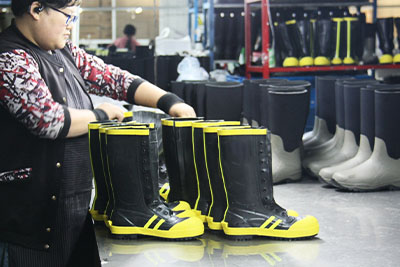
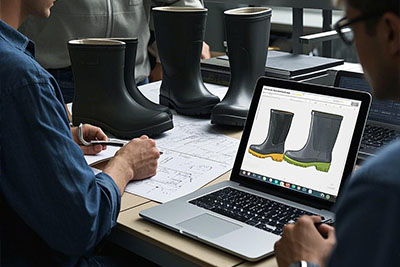
For brand pursuing top-tier rubber deck boots solutions, Trenboo excels in bespoke vulcanized rubber productions. Boasting a 150,000-pair monthly capacity, ODM/OEM expertise, and rigorous quadruple assurances on quality, environment, technology, and service, Trenboo crafts customizable rubber boat deck boots primed for demanding markets. Contact Trenboo now to collaborate on innovative designs and bolster offerings with superior, slip-resistant waterproof footwear.

 consult
 WHATSAPP
 leave message
 top
top