



Related news
-
What Makes the New Foldable Rain Boots from Trenboo Truly All-Terrain Ready?
-
How Do Print Rubber Boots Combine Chinese Symbolism with Modern Rainwear?
-
What Makes Molded Rubber Outsoles Essential for Rain Boot Durability and Performance
-
What Are the Best Kids Cartoon Rain Boots for Puddle-Jumping Adventures in 2025?
What Is the Difference Between Waterproof and Water-Resistant Boots?
In the world of shoes, people often mix up the words “water-repellent,” “water-resistant,” and “waterproof.” They sound similar, yet they mean totally different things. Real experts only talk about two main levels that actually keep your feet dry when things get wet outside. Watch the Video Here

Level 1: Water-Resistant Boots – When Only the Materials Are Protected
What “Water-Resistant” Actually Means
Water-resistant boots use special materials that push water away on their own. Common uppers come from treated full-grain leather, tightly woven nylon, or synthetic fabrics covered with durable water-repellent (DWR) finishes. The outsole is normally rubber or PU that refuses to soak up water. Everything looks perfect on paper.
The Hidden Weakness: Needle Holes and Seams
The big problem hides in how the boot is put together. Most water-resistant boots are sewn with thread. Each stitch leaves tiny holes in the material. These little holes work like small tunnels for water. During light rain, morning dew, or wet grass, the water stays out because of surface tension. Feet stay dry in gentle conditions.
When Hydraulic Pressure Wins
Things change fast when water gets deeper or lasts longer. Strong pressure pushes liquid straight through those tiny stitch holes. That is why water-resistant boots handle light snow or quick showers fine, but they start leaking the moment you step into a deep puddle or walk for hours in heavy rain. This simple fact shows the main difference. One type only guards the materials. The other guards the whole boot.
Typical Applications and Maintenance Needs
Water-resistant boots stay popular for spring and fall weather, easy outdoor jobs, and places where fresh air flow matters more than total dryness. Still, the DWR coating slowly wears away from rubbing and sunlight. Owners need to spray fresh water-repellent often to keep them working well.
Level 2: Fully Waterproof Boots – Material + Structural Integrity
The Principle of Zero Entry Points
Fully waterproof boots close every single path water could use. Makers build the upper from materials that never let water pass, such as vulcanized natural rubber, injected PU, or PVC. They join the upper to the sole without any stitches using direct injection or high-frequency welding. Nothing pierces the surface below the waterline. Water has no tiny holes to sneak through.
Real-World Immersion Performance
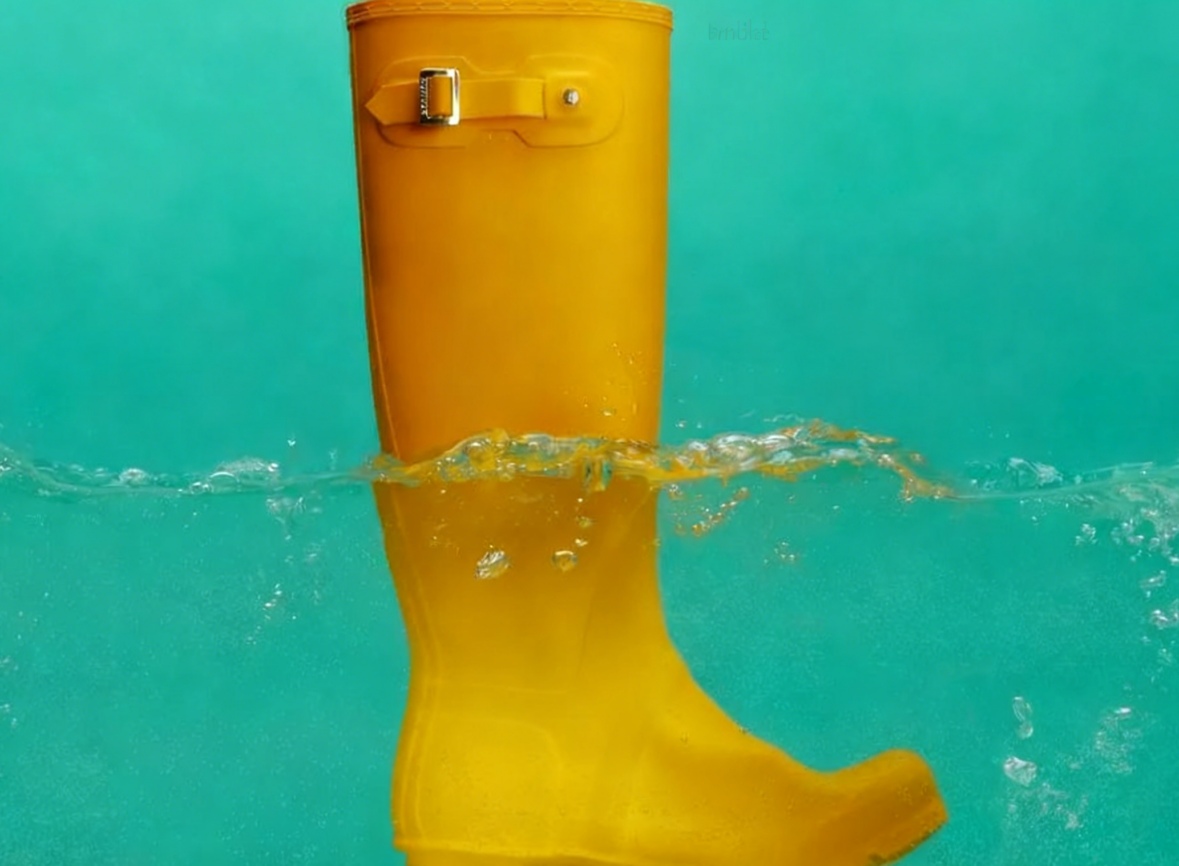
The whole boot becomes one solid, water-blocking shell. Feet remain completely dry even when the boot stays underwater for hours. Deep puddles, strong rain, thick snow, flooded fields, or walking beside the sea cause no trouble at all. This strong structural design sets true waterproof boots apart from water-resistant ones.
Breathable-Waterproof Hybrid Technologies
Today’s fully waterproof boots often add thin microporous membranes or neoprene linings. These clever layers let sweat vapor escape while keeping liquid water outside. They fix the old complaint that rubber boots feel hot and sticky after long wear.
Direct Comparison: Water-Resistant vs Waterproof Boots
| Aspect | Water-Resistant Boots | Fully Waterproof Boots |
|---|---|---|
| Materials | Treated leather/fabric + rubber sole | Vulcanized rubber, injected PU/PVC |
| Construction | Stitched seams & needle holes | Seamless/monolithic bonding |
| Light rain / dew | Dry | Dry |
| Heavy rain / puddles | Leaks under pressure | Remains 100 % dry |
| Submersion | Immediate leakage | No leakage (even prolonged) |
| Breathability | Excellent | Good to excellent (with membrane) |
| Maintenance | Regular DWR reapplication | Virtually none |
| Weight | Lighter | Slightly heavier |
| Typical lifespan | 1–3 seasons (depending on care) | 5–10+ seasons |
Advantages of Waterproof Boots vs Water-Resistant Boots in Professional Settings
-
Health & Hygiene Wet socks lead to blisters and foot fungus fast. Fully waterproof boots remove that danger completely. Workers in farming, fishing, and food-processing stay healthier and miss fewer days.
-
Safety Compliance Many EN ISO 20345 rules now require real waterproof ability (S4/S5 ratings) for wet jobs. Water-resistant boots simply fail those tests.
-
Productivity Gains People in fully waterproof boots keep working through heavy rain. They never stop to change wet socks or pour water out of boots. The job gets done quicker.
-
Long-Term Cost Savings The starting price is higher, but fully waterproof vulcanized rubber boots last 3–5 times longer in tough conditions. The cost per day of use drops a lot.
-
Chemical & Biological Resistance Smooth rubber with no seams fights acids, fertilizers, animal waste, and strong cleaners much better. Farms and factories love this feature.
Manufacturing Techniques That Achieve True Waterproof Performance
Vulcanization Process
Workers wrap natural rubber sheets around a foot-shaped form. Then they heat and press it with sulfur inside a special oven. The rubber turns into one tough, totally sealed shell.
Direct Injection Molding
Liquid polyurethane or PVC flows straight onto the upper material. It hardens into a perfect bond with no gaps at all.
High-Frequency Welding & Tape Sealing
This method melts membrane layers together without any needle holes. It works great for modern hybrid boots.
These proven ways explain why vulcanized rubber boots stay the top choice for real waterproof power around the world.
Industry Testing Standards That Prove the Difference
· Water-Resistant Level Tested with EN ISO 20345 Water Penetration & Absorption (WPA) – only checks surface soaking.
· Fully Waterproof Level Must survive Dynamic Water Penetration Test: boot bends for 80+ minutes underwater with almost zero leaks (max 3 cm² water trace allowed).
· Hydrostatic Pressure Ratings Good waterproof rubber boots handle 10,000–15,000 mm water column. Top models go over 30,000 mm.
These fair tests clearly show why the difference matters on real job sites.
Choosing Between Water-Resistant and Waterproof Boots for Specific Industries
· Water-Resistant → city walking, light gardening, dry warehouse work · Fully Waterproof → fishing, agriculture, construction, food processing, flood response, cold-storage facilities
Conclusion
The gap between water-resistant and waterproof boots is not just small steps. It is a complete difference between protecting only the fabric and building a boot that water can never enter. Water-resistant boots always have stitch holes that leak under strong pressure. Fully waterproof boots remove every opening with seamless design. They promise dry feet no matter how bad the weather gets.
For companies that need reliable, long-lasting waterproof boots, working with skilled vulcanized rubber specialists is the smartest choice.
Partner with Trenboo: China’s Leading Vulcanized Rubber Boot Manufacturer for Seamless Waterproof Solutions
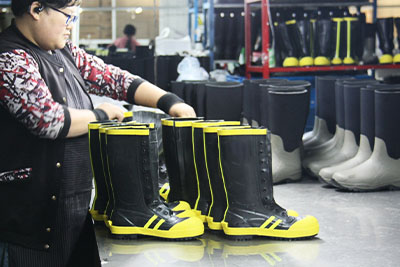
Trenboo runs one of China’s biggest and most modern vulcanized rubber boot factories. The plant makes over 5 million pairs every year using full seamless waterproof technology. With more than 60 years of know-how, own material labs, and ISO9001/BSCI certification, Trenboo delivers full ODM/OEM service from basic water-resistant styles to S5-level fully waterproof safety boots. Contact the team today for custom projects, free samples, test reports, or factory visits.

 consult
 WHATSAPP
 leave message
 top
top