
Related news
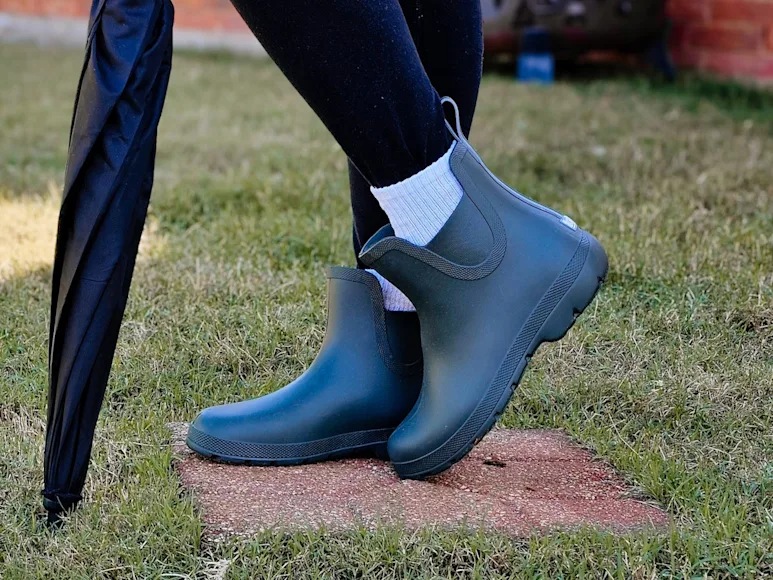
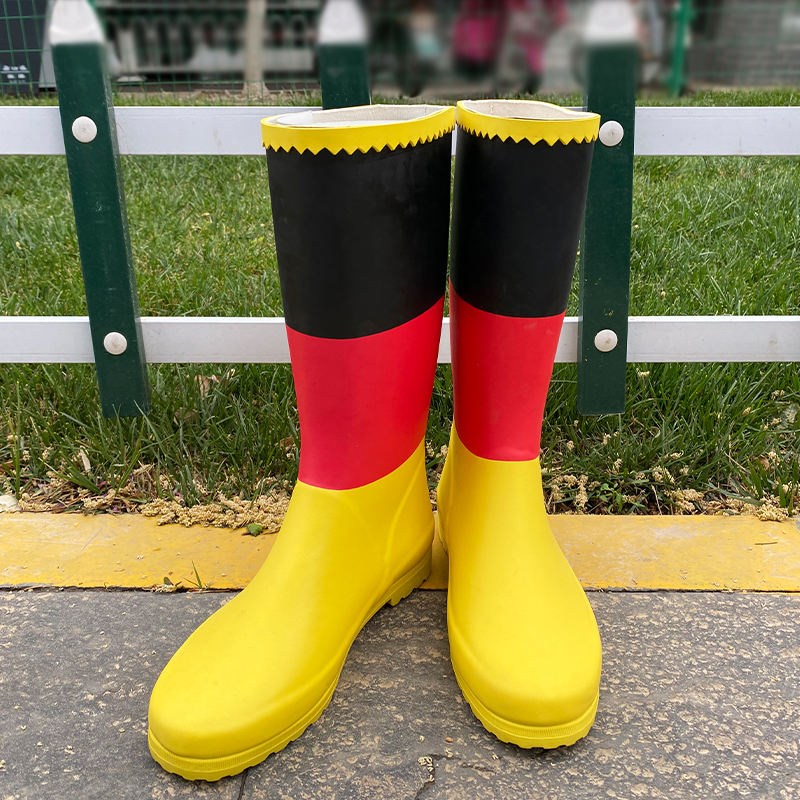
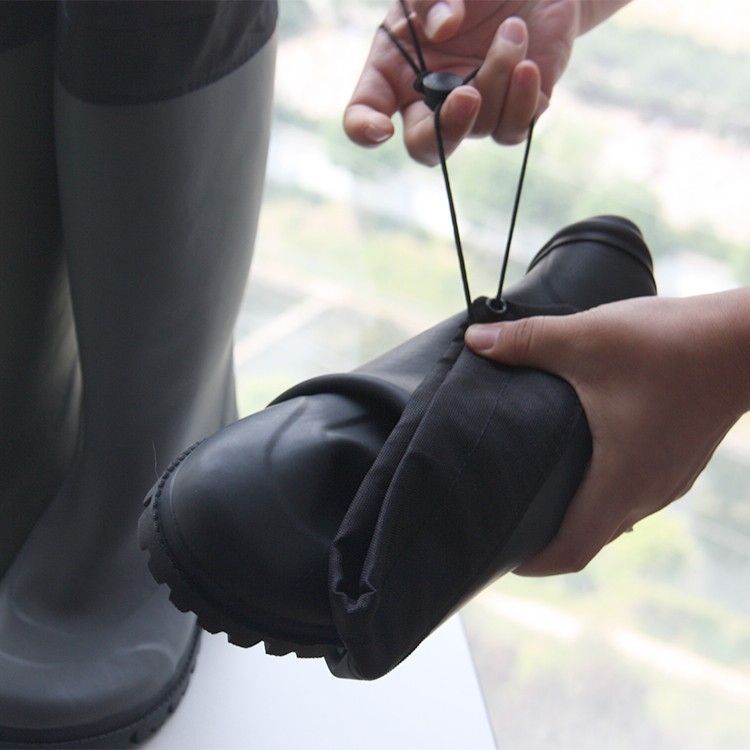
What Makes Molded Rubber Outsoles Essential for Rain Boot Durability and Performance
Molded rubber outsoles play a vital role in rain boot design. They form the key contact point between the person wearing the boots and tough, wet ground. In the rain boot business, shoes face constant water, thick mud, and rough surfaces. These outsoles give outstanding strength and steady performance. Workers make them through careful vulcanization with natural rubber. This method keeps rain boots soft, fully waterproof, and safe from slipping even after long daily use.
Click to watch the video.
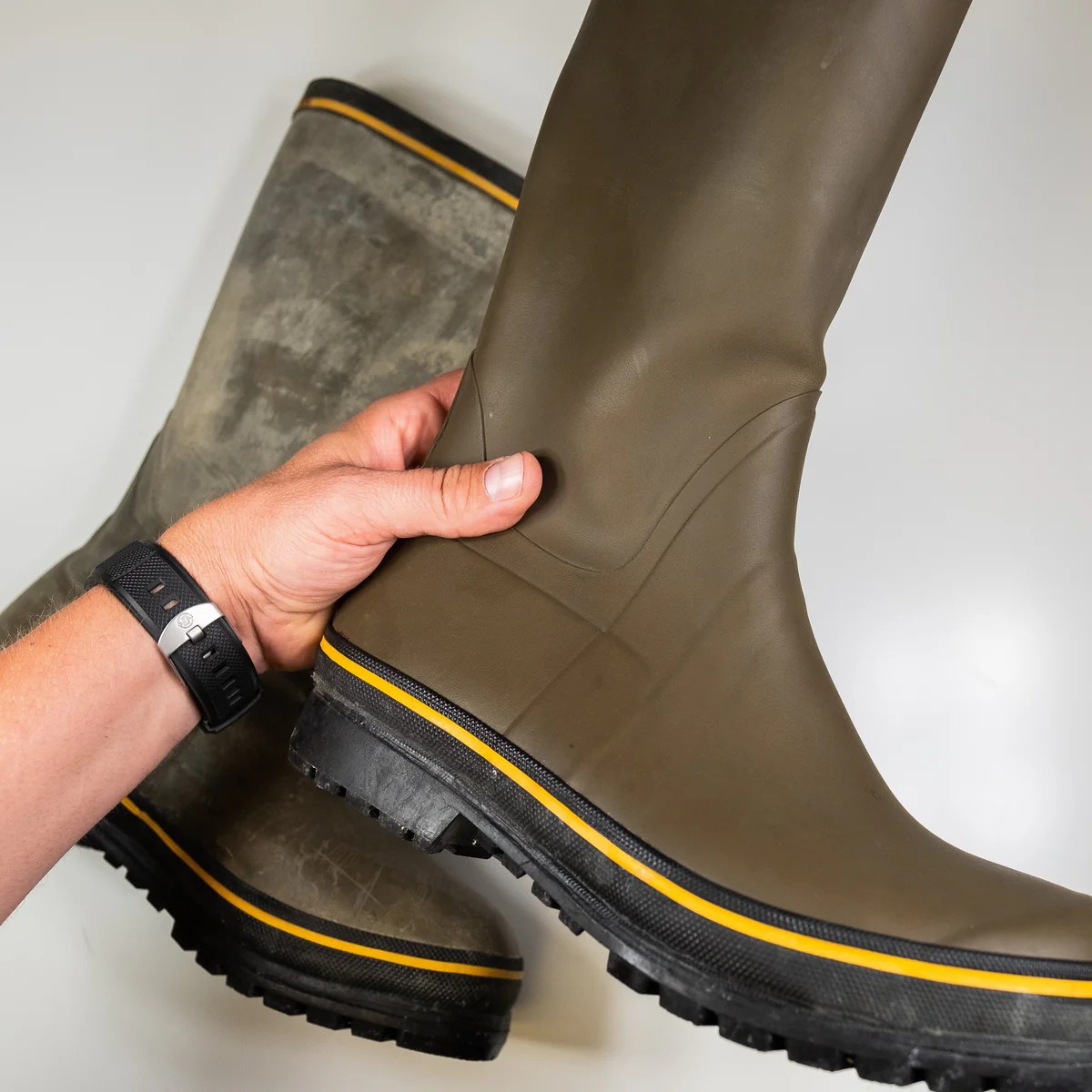
The Intricate Manufacturing Process of Molded Rubber Outsoles for Rain Boots
1. Mold Creation
Everything starts with building strong steel molds. These molds decide exactly how the finished outsole will look. Each mold has two main parts:
-
The upside shapes the inside area that joins perfectly with the boot upper.
-
The downside carves the tread pattern and outer shape.
The whole outsole design is cut deeply into the steel. This allows detailed patterns that improve grip and make the boot look better.
2. Material Preparation
Natural rubber is the main choice because it stretches well and comes from renewable sources. Workers take uncured rubber sheets (sometimes called “pigs” or “slugs”), weigh them carefully, and warm them on big rollers until they become soft and easy to shape. Then they put this warm rubber into the open mold. After that, the two mold halves close tightly under very strong pressure from a hydraulic press. This stops air bubbles and spreads the rubber evenly.
3. Molding and Vulcanization
The soft rubber sits inside the mold cavity. A hydraulic press pushes with up to 100 tons of force and closes the mold completely. No air stays trapped inside. Right after closing, vulcanization begins:
-
Temperature: 130–160°C
-
Pressure: up to 100 tons
-
Time: 5–15 minutes depending on thickness
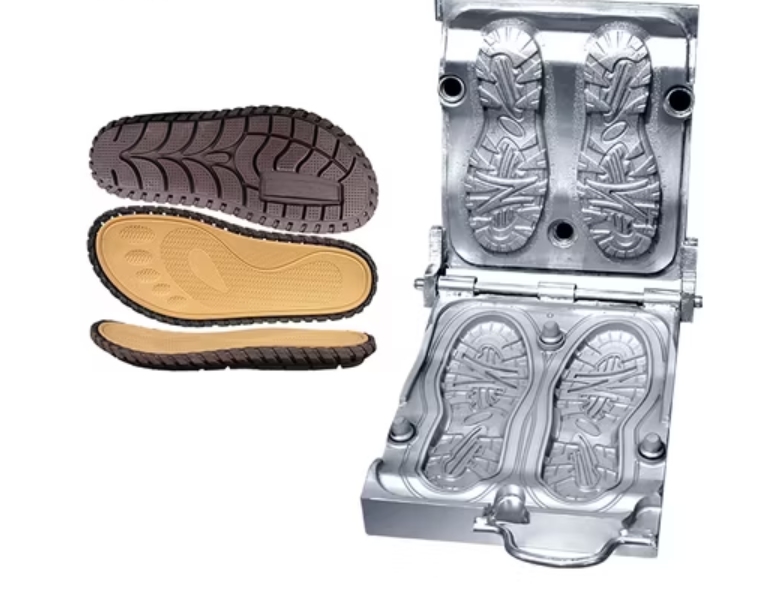
The heat wakes up the sulfur curing agents. These agents create strong cross-links between rubber molecules. In the end, the rubber turns into a tough yet springy outsole.
4. Post-processing and Quality Control
Once vulcanization finishes:
-
The outsole cools down and workers remove it from the mold.
-
Extra rubber edges (called flash) get cut away neatly.
-
Team members check size, surface smoothness, and any small flaws.
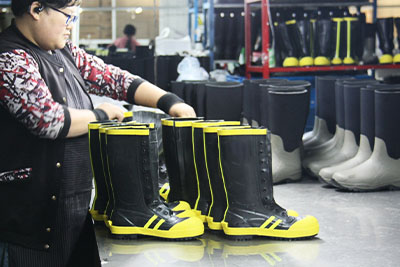
This whole process is very different from PVC injection molding. It creates much stronger bonding and longer lifespan. Factories with many vulcanizers can finish up to 5,000 pairs each day. They use internal mixers and calendering machines to keep the rubber mix perfectly steady.
Key Properties That Define Molded Rubber Outsoles in Rain Boot Applications
1. Flexibility
Molded rubber outsoles shine because vulcanized natural rubber stays bendy for years. Flexibility is one of the top features. The rubber can stretch and return to shape without breaking. This helps feet move naturally on wet, slippery ground. Farmers and outdoor workers love this when they walk through deep mud or over sharp rocks.
2. Waterproof Integrity
Keeping water out is another strong point. The one-piece molding leaves no seams where water could leak in. Natural rubber naturally pushes water away. Tests show these outsoles stay dry even after sitting in water for many hours. Fabric or cheap synthetic soles soak up water quickly by comparison.
3. Anti-Slip Traction
Safety on wet floors matters most. The bottom side has deep lugs, chevron shapes, or tiny siping channels carved right in. These push water and dirt away fast. Tests often show friction values above 0.6 on wet ground. Adding silica or carbon black makes grip even better on oily or icy spots.
4. Durability
These outsoles last a long time. Abrasion tests using DIN standards usually go beyond 500 cycles. That means the soles resist scratches from stones, gravel, or heavy farm tools.
5. Environmental Resilience
Natural rubber comes from Hevea brasiliensis trees and breaks down naturally over time. It beats oil-based plastics for the planet. Many factories now mix in recycled material. The boots stay just as strong while leaving a smaller mark on nature.
Customization Strategies for Molded Rubber Outsoles in Bulk Rain Boot Production
1. Full Customization with Steel Molds
For big orders, brands order their own steel molds. These allow:
-
Unique tread patterns
-
Special heel shapes
-
Curves that fit the foot better
-
Company logos carved right in
-
Colors stay exactly the same using Pantone codes, even across thousands of pairs.
2. Cost-Efficient Options Using Public Molds
Public molds have empty spaces ready for quick changes. Factories add:
-
Swappable logo blocks
-
Different texture rollers
-
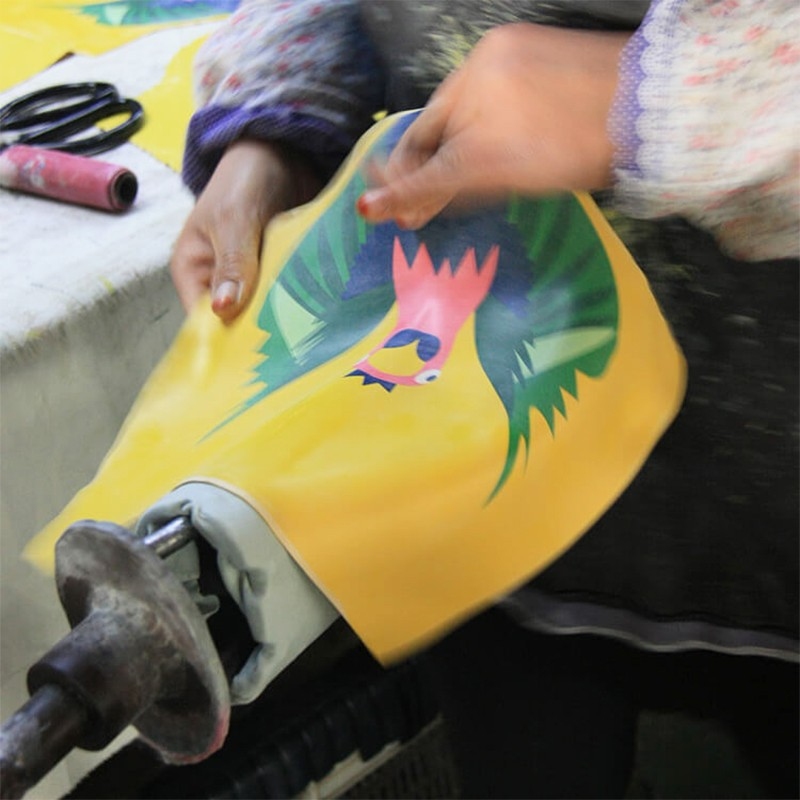
Transfer film graphics
This way saves 50–70% on mold costs. It works great for seasonal styles or cheaper lines.
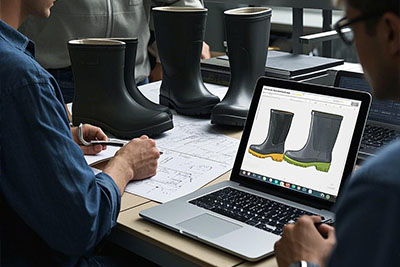
3. Development Workflow
The usual steps are:
-
First simple drawings
-
Then CNC-milled or 3D-printed samples
-
Rubber hardness tests (often Shore A 55 durometer)
-
Small test runs (MOQ ~ 800 pairs)
4. Advanced Functional Customizations
Factories can also add:
-
EPDM/SBR blends that resist oil
-
Steel shanks for extra foot support
-
Matt finishes or silica-rich surfaces
These extras help brands stand out in stores.
Advancements and Future Trends in Molded Rubber Outsole Technology for Rain Boots
New ideas keep making molded outsoles better and greener:
1. Eco-Friendly Compounds
Rice husks or cork pieces replace some new rubber. Grip and strength stay the same.
2. Smart Manufacturing
Computers watch the vulcanization process closely. Machines roll rubber more evenly. One factory can now reach up to 150,000 pairs monthly.
3. Cold-Molding and Hybrid Designs
New methods give sharper tread details. Boots become lighter by joining rubber outsoles with EVA midsoles.
4. Rapid Prototyping with 3D-Printed Molds
Sample molds finish in days instead of weeks. Brands can test ideas much faster.
5. Functional Enhancements
Special conductive rubber stops static electricity. This helps workers in factories or oil fields stay safe.
Conclusion
Molded rubber outsoles blend old skills with fresh ideas in rain boot making. Their vulcanized build delivers lasting:
-
Flexibility
-
Waterproof protection
-
Traction
-
Durability
With so many custom choices and greener materials coming soon, molded rubber outsoles remain the solid base for top-quality rain boots around the world.
FAQ
What is the primary material used?
Natural rubber, often blended with synthetic additives.
How does vulcanization improve performance?
It cross-links rubber molecules, increasing durability, flexibility, and water resistance.
Can tread patterns be customized?
Yes—through dedicated molds or modular inserts.
What makes them anti-slip?
Deep tread designs and silica additives.
Are there cost-saving customization options?
Public molds with modular logo blocks reduce tooling costs significantly.
How do molded rubber outsoles support sustainability?
They use renewable natural rubber and recyclable blends.
Partner with Trenboo for Your Next Rain Boot Project
Ready to launch strong, custom rain boots? Trenboo offers complete ODM/OEM rain boot production and brings decades of know-how in molded rubber outsole technology. Brands can order private molds with exclusive tread designs, quick public-mold changes, dual-color vulcanized soles, or eco-friendly bio-rubber mixes. The factory keeps quality steady at big volumes.
From first sketches and 3D samples to full-scale runs of 150,000+ pairs per month, Trenboo manages everything: rubber mixing, exact mold building, vulcanization, lasting, and tough quality checks. Customers worldwide count on Trenboo for fast lead times, fair prices, and on-time shipping anywhere.
Take the next step toward tough, branded rain boots that sell. Email the team today at yori@wellies.cn or go to www.trenboot.com to ask for a quote, see the full outsole catalog, and book a virtual factory tour. Let Trenboo make sturdy, waterproof boots real—starting right now.

 consult
 WHATSAPP
 leave message
 top
top