


Related news


Molded vs. Calendered Rubber Soles: A B2B Buying Guide for Different Boot Applications
For importers, wholesalers and private-label footwear brands, outsole construction affects more than comfort. It influences product positioning, tooling requirements, material selection, production cost, durability expectations and the type of customer each boot can serve.
When sourcing rubber Wellington boots, two common options are a molded rubber sole and a calendered rubber sole. The best choice depends on the application, required outsole geometry, target price, order volume and customization plan.

What Is the Difference Between Molded and Calendered Rubber Soles?
A molded rubber sole is formed inside a mold under controlled heat and pressure. This process is suitable for defined tread patterns, structured heel designs and integrated boot construction. It can help brands develop a consistent outsole shape across larger production runs.
A calendered rubber sole is made from rubber compound processed into sheets by rollers. The sheet is then shaped, cut or assembled with the boot structure. This approach can support flexible outsole designs, lightweight concepts and certain packable or barefoot-style boots.
The manufacturing term does not automatically determine product quality. Buyers should compare the rubber compound, hardness, tread depth, bonding, vulcanization conditions, testing method and intended end use.
Buyer Note: For Brands and Importers
The sole decision should be made together with the product brief. A buyer developing industrial work boots may prioritize deep lugs, stable heel geometry and safety compliance. A fashion retailer may prefer a lighter sole with a cleaner profile. A camping or travel brand may value flexibility, low weight and foldability.
Before requesting a quotation, define:
- End-use environment, such as agriculture, fishing, hunting or industrial work
- Required waterproofing, traction and flexing performance
- Target material, including natural rubber, neoprene, PVC, TPR or EVA
- Size range, colorways and annual purchasing volume
- Logo, packaging and private-label requirements
- Whether an existing last and outsole can be used or a new design is needed
This information helps the supplier recommend a practical sole construction instead of quoting a generic boot.
Which Sole Is Suitable for Each Application?
Industrial and Safety Rubber Boots
For mining, construction, firefighting, lumbering and electrical work, a molded sole is often worth evaluating because the outsole can be designed around a stable tread and structured support. Buyers should request slip-resistance data, safety-toe specifications, flexing tests and applicable standards such as EU 20345 S5 where relevant.
You can review Trenboo’s OEM anti-smash roller-sole steel-toe safety boots as a related industrial reference. The exact outsole compound and test documentation should be confirmed for each project.
Agriculture, Gardening and Outdoor Work
Farm and garden boots need waterproofing, traction and resistance to repeated contact with mud, moisture and uneven ground. A molded tread can be useful when the design requires pronounced lugs. For lighter outdoor boots, a calendered construction may provide a more flexible feel.
For men’s outdoor sourcing programs, buyers can compare adjustable-height chunky-sole vulcanized rubber boots with other outdoor models before finalizing the outsole specification.
Fishing and Marine Footwear
Fishing and marine buyers should focus on wet-surface traction, saltwater exposure, drainage expectations, lining selection and cleaning requirements. The outsole choice should be tested with the complete boot because tread performance can change with rubber hardness and surface conditions.

Fashion, Lifestyle and Foldable Boots
Fashion and lifestyle brands often require a balance between appearance, comfort and production flexibility. A calendered sole may be considered for lightweight, flexible or packable designs, while a molded sole can support a more distinctive platform, heel or tread profile.
Trenboo’s women’s non-slip waterproof foldable Wellington boots and foldable barefoot rubber rain boots show two different directions for lightweight and flexible product development.
Kids’ Wellington Boots
For children’s boots, buyers should consider weight, flex, easy cleaning, chemical compliance, outsole grip and age-appropriate sizing. The material may be rubber, PVC, EVA or another approved compound, so the specification must clearly identify the upper and outsole materials.
A relevant reference is Trenboo’s three-color injection-molded rain boots for children. Because this model uses PVC, buyers should not assume that every injection-molded boot has a rubber sole.
Related Products for B2B Buyers
After comparing sole construction, buyers can continue product evaluation through related collections:
- Kids wellies for wholesale and private-label programs
- Adult outdoor wellies for hunting, farming and general outdoor use
- Foldable barefoot rain boots with flexible construction
- Safety rubber boots for industrial and construction channels
- Women’s fashion wellies for retail and lifestyle brands
These product pages can help buyers compare existing molds, size ranges, material combinations and customization potential before commissioning a new design.
OEM/ODM Considerations Before Placing an Order
MOQ is normally related to the model, color, size range, material and packaging plan. Published Trenboo product examples show MOQs ranging from approximately 500 to 1,000 pairs per color or style, while some models list higher quantities. Treat these figures as model-specific references and confirm the final MOQ in the quotation.
Important customization points include:
- Natural rubber, neoprene, PVC, TPR or EVA selection
- Upper thickness, texture, base color and printed patterns
- Molded, calendered, cemented or other outsole construction
- Existing shoe last versus newly developed last
- Logo placement on the outsole, upper, top band or pull tab
- Custom lining, insole cover, carton and retail packaging
- FSC or recycled-material packaging requirements where applicable
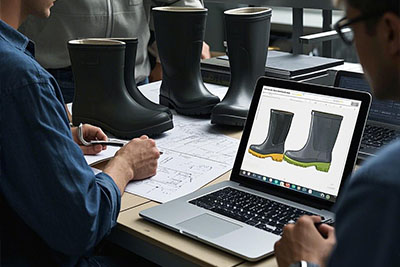
The Trenboo ODM/OEM process lists a practical sequence: define the boot type, confirm the last and outsole, select materials, define color and logo, then review sample timing and cost.
The site states that a customized sample can generally be developed within 15 days, with revisions available before mass production. After sample approval and a deposit, the published production guidance indicates a target of up to 45 days, depending on product complexity and order details. Buyers should confirm the production calendar, inspection points, shipping window and payment terms in writing.
Related Factory Capability and Procurement Trust
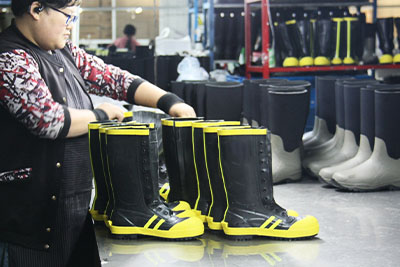
Trenboo’s factory page states that the facility operates six Wellington boot production lines with a total capacity of approximately 5,000 pairs per day. It also describes internal rubber mixing, mill-mixing and vulcanization equipment, supported by laboratory instruments including a vulcanization rheometer, tensile tester and flexing tester.
The company states that it has more than 30 years of manufacturing experience and exports to more than 50 countries. Listed certifications and compliance references include ISO9001, BSCI, CE, REACH, EU 20345 S5, CPC and GRS. Buyers should request the certificates and test reports applicable to their destination market and product category.
Quality control is described as a five-stage process covering incoming material inspection, online assembly inspection, leakage testing after vulcanization, packaging inspection and AQL 2.5 sampling inspection. The public website does not state a current factory-area figure in square meters, so buyers should request the confirmed factory footprint and line allocation in the RFQ.
For private-label rain boot projects, buyers can review Trenboo’s OEM/ODM process and related rubber boot collections, then use the Contact page to submit the application, target volume, material preference, logo artwork and packaging brief.
FAQ
1. Which is better for industrial rubber boots: molded or calendered soles?
Molded rubber soles are often preferred for structured tread patterns, stable support and demanding work environments. The final choice should be confirmed through slip, flexing and safety tests.
2. Can buyers customize molded or calendered rubber soles?
Yes. OEM/ODM projects can specify the outsole construction, rubber compound, tread pattern, color, logo placement, lining and packaging. MOQ depends on the model, materials and order quantity.
3. How long does a customized rubber boot project take?
Trenboot’s published process states that a customized sample can be developed in about 15 days. After sample approval, mass production may take up to 45 days, subject to product complexity and order details.
Conclusion
Molded rubber soles are often suitable for structured tread designs, industrial protection and distinctive outsole geometry. Calendered rubber soles may be considered for flexible, lightweight, packable or barefoot-oriented concepts. The correct decision depends on the complete product specification rather than the process name alone.
A strong B2B sourcing process should connect sole construction with material choice, last development, MOQ, sample approval, compliance testing, packaging, production timing and after-sales support. By reviewing products, factory capability and OEM/ODM procedures together, buyers can move from technical research to a more reliable quotation and bulk-order decision.

 consult
 WHATSAPP
 leave message
 top