


Noticias relacionadas


Por qué son importantes las botas impermeables para bomberos: una guía de compras B2B
Calzado de bombero Es posible que se encuentren con agua de extinción, calor, lodo, aceites, escombros y escorrentía contaminada durante la misma operación. Por lo tanto, la impermeabilización afecta la estabilidad térmica, la tracción, el ajuste, la vida útil y la disponibilidad de la flota, en lugar de funcionar como una simple característica de comodidad. Los equipos de compras deben distinguir el calzado certificado para bomberos de las botas impermeables comunes y evaluar la construcción, las pruebas, la capacidad del proveedor, la personalización y la consistencia del lote. Trenboo apoya programas internacionales de calzado como fabricante, proveedor y fábrica de botas de caucho vulcanizado con desarrollo OEM/ODM y producción escalable.

Por qué es importante la impermeabilidad en el calzado profesional
Control de la humedad, movilidad y vida útil
El agua dentro de una bota aumenta la fricción, añade peso y puede reducir la estabilidad al trabajar en escaleras, arrodillarse, subir escaleras y en operaciones prolongadas. En condiciones de frío, la humedad también acelera la pérdida de calor. Una estructura impermeable confiable debe proteger la parte superior, las zonas de flexión, la unión de la suela, las costuras y la abertura de la bota.
La resistencia inicial al agua no es suficiente. La flexión repetida en el antepié, el tobillo y el talón puede revelar defectos de unión o de fabricación. Las especificaciones B2B deben incluir una evaluación de la estanqueidad de toda la bota, pruebas de flexión, comprobaciones de la unión de la suela y una inspección de producción.
La certificación de bombero no puede ser reemplazada por una afirmación de impermeabilidad.
Una bota de goma impermeable no es automáticamente adecuada para la extinción de incendios estructurales. El calzado utilizado en el lugar del incendio puede requerir protección contra el calor, las llamas, los impactos, la penetración, los líquidos peligrosos y los resbalones. Los bomberos especializados en la extinción de incendios estructurales deben consultar la norma aplicable y verificar el titular del certificado, el número de modelo, el lugar de fabricación, el informe de pruebas y la construcción aprobada.
Las botas de goma de seguridad pueden ser apropiadas para trabajos industriales en ambientes húmedos, logística de emergencia, saneamiento, respuesta a inundaciones o tareas en la estación, pero no deben presentarse como EPI (Equipo de Protección Individual) para la lucha contra incendios estructurales sin la certificación requerida.
Nota para compradores (marcas e importadores)
Las decisiones sobre materiales y diseño afectan al posicionamiento comercial.
La selección de materiales influye en la impermeabilidad, el peso, la flexibilidad, la resistencia a la abrasión, el aislamiento, la apariencia, el costo y las pruebas. El caucho natural y los compuestos de caucho sintético permiten diferentes estrategias de rendimiento y precios. El neopreno, la malla transpirable, el forro polar, el algodón y otras opciones de revestimiento satisfacen las necesidades de clima frío, comodidad o las demandas estacionales del mercado.
Las posibles decisiones de diseño en cuanto al calzado incluyen: la altura de la caña, el dibujo de la suela, la forma de la puntera, el volumen de la pantorrilla, el diseño del sistema de calce, el acabado superficial, el color y el forro. Al diseñar calzado para el mercado regulado, las modificaciones en la fórmula del caucho, el grosor de los materiales, el compuesto de la suela, las protecciones y la forma de confección pueden afectar la certificación del calzado y requerir una evaluación técnica.
La segmentación de aplicaciones mejora la planificación de rangos.
Los programas de adquisición deben diferenciar entre calzado para extinción de incendios estructurales, calzado para estaciones, seguridad industrial, trabajos al aire libre, respuesta a inundaciones y colecciones de moda. Esto evita que las aplicaciones de alto riesgo no estén suficientemente especificadas y que los productos de menor riesgo tengan costos innecesarios.
Un fabricante de botas de goma para pedidos al por mayor debería adaptar los materiales y la construcción al entorno previsto, en lugar de ofrecer una especificación genérica para todos los mercados.

Información sobre decisiones de adquisición
Cantidad mínima de pedido, personalización y embalaje.
La cantidad mínima de pedido (MOQ) depende del modelo, el material, el color, la suela, la horma, el método de logotipo, la distribución de tallas y el embalaje. Los ejemplos de proyectos publicados varían desde 500 pares por color para botas de seguridad seleccionadas hasta aproximadamente 800 pares para ciertos programas de botas de goma personalizadas. La MOQ final debe confirmarse en el presupuesto y el contrato de compra.
La personalización puede abarcar el compuesto y el grosor del caucho, el color Pantone, el acabado de la superficie, el forro, la horma del zapato, la suela, la gama de tallas, el embalaje y las aplicaciones de logotipos impresos, moldeados, en relieve o basados en etiquetas.
La aprobación del embalaje debe definir las dimensiones de las cajas, los códigos de barras, los requisitos lingüísticos, las marcas de envío y la paletización cuando sea necesario.
Confirmación de muestras y control de pedidos al por mayor
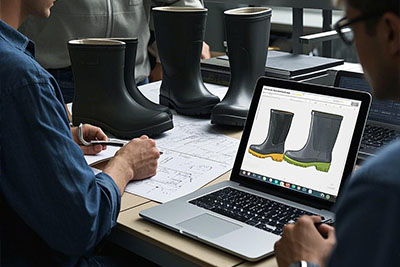
Un proceso de muestreo controlado reduce el riesgo de aprovisionamiento. La secuencia recomendada incluye la confirmación del concepto, una muestra funcional, una muestra de tamaño determinado, una muestra de prueba, una muestra de preproducción y una muestra de aprobación sellada.
Los registros de muestras deben confirmar los materiales, las dimensiones, el peso, el color, la posición del logotipo, la dureza de la suela, la mano de obra, el embalaje y las referencias de las pruebas. La producción en masa no debe comenzar hasta que todas las discrepancias se hayan resuelto por escrito.
Las órdenes de compra deben definir las tolerancias, los derechos de inspección, los plazos de entrega, los procedimientos de control de cambios, los términos de la garantía y las responsabilidades en caso de defectos.
Capacidad de fábrica relacionada
Capacidad de producción y experiencia en exportación
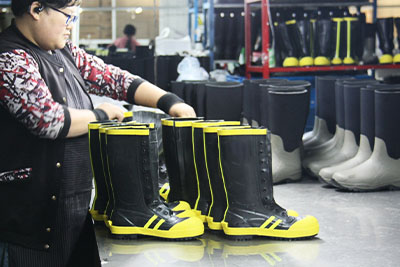
La fábrica cuenta con aproximadamente 20.000 metros cuadrados de espacio de producción, seis líneas de producción de botas de agua, una capacidad diaria de unos 5.000 pares, una producción mensual de aproximadamente 150.000 pares y exportaciones a más de 50 países.
Estas cifras respaldan la evaluación de proveedores para pedidos repetidos, pero aún así se debe confirmar la capacidad disponible para el plazo de entrega requerido, especialmente durante las temporadas altas.
Certificaciones y control de calidad
Entre las credenciales publicadas se incluyen ISO 9001, BSCI, GRS, FSC y el cumplimiento de los requisitos REACH de la UE. La capacidad de fabricar calzado de seguridad también se asocia con los requisitos de la norma EN ISO 20345. Las certificaciones de sistemas de fábrica no certifican automáticamente todos los productos, por lo que se deben revisar los certificados vigentes, el alcance, las fechas de vencimiento y los informes específicos del modelo antes de su aprobación.
La capacidad de control de calidad abarca la mezcla de caucho, el control de vulcanización, las pruebas de tracción y flexión, la inspección de materiales entrantes, los controles en proceso, las pruebas de fugas, la verificación dimensional, el control de apariencia y la inspección de calidad del embalaje. Se recomienda realizar pruebas independientes por parte de terceros si así lo exige la ley o las bases de la licitación.
Plazo de entrega de muestras, ciclo de producción y servicio posventa.
Los ejemplos de productos publicados indican que el desarrollo de muestras dura aproximadamente entre 15 y 20 días, y la producción en masa entre 25 y 40 días después de la aprobación. El tiempo real depende de las herramientas, los materiales, las pruebas, el volumen de pedidos y el grado de personalización.
Un acuerdo comercial debe definir los procedimientos de reemplazo, las pruebas de reclamación, los plazos de respuesta, las medidas correctivas y la responsabilidad por los defectos de fabricación confirmados. Unas condiciones de posventa claras mejoran la responsabilidad del proveedor y la planificación de pedidos repetidos.
Productos relacionados para una evaluación más exhaustiva del proveedor.
Colecciones de seguridad y para exteriores
Botas de seguridad impermeables de caucho para uso industrial. Puede utilizarse en aplicaciones industriales húmedas, de construcción, de fabricación y de logística cuando la certificación indicada coincide con el mercado previsto.
Las botas de agua para adultos, ideales para actividades al aire libre como la agricultura, la pesca, la caza y el trabajo en el campo, ofrecen opciones a los distribuidores que operan en entornos húmedos y fangosos.
Las botas de lluvia plegables para viajes, kits de emergencia y almacenamiento compacto amplían la gama a aplicaciones ligeras y fáciles de transportar.
Colecciones para venta al por menor y de marca propia
Las botas de agua infantiles para programas escolares y de venta minorista de temporada pueden incluir colores personalizados, diseños impresos, asas, forros y embalajes de marca.
Las botas de agua de moda para mujer de las colecciones de marca propia incluyen modelos Chelsea, tobilleros, de media caña, estampados y de colores lisos para los canales de moda y estilo de vida.
Estas categorías ayudan a los equipos de compras a comparar la construcción, el alcance de la personalización, el precio objetivo y la idoneidad del proveedor antes de pasar a las muestras.
Preguntas frecuentes
¿Qué se debe verificar antes de realizar un pedido al por mayor?
El expediente de compra debe incluir la especificación técnica, los certificados válidos, los informes de prueba específicos del modelo, la tabla de tallas aprobada, el plan de control de calidad, el diseño del embalaje, la muestra sellada, el plazo de entrega, las condiciones de inspección y el procedimiento de garantía.
¿Cómo se debe evaluar el rendimiento de la impermeabilidad?
La evaluación debe combinar la revisión de los materiales, las pruebas de estanqueidad de la bota completa, el acondicionamiento de la flexibilidad, la inspección de la unión de la suela, las comprobaciones dimensionales y el control de calidad a nivel de lote.
¿Cuál es el principal riesgo en el desarrollo de productos OEM?
El principal riesgo reside en los cambios incontrolados. Cualquier modificación de los materiales, la construcción, las herramientas, el color, el forro, la suela o el método de creación del logotipo debe documentarse, aprobarse y someterse a nuevas pruebas cuando sea necesario.
Para proyectos de botas de lluvia de marca privada, los compradores pueden revisar el proceso OEM/ODM de Trenboo, explorar las colecciones de productos de botas de goma, evaluar la capacidad de la fábrica y enviar los requisitos del proyecto a través de Página de contacto. Trenboo La empresa es fabricante, proveedor y fábrica, y ofrece servicios de selección de materiales, desarrollo de hormas de calzado, desarrollo de suelas, personalización de logotipos, aprobación de muestras, embalaje, control de calidad y producción en masa para marcas, importadores, distribuidores y programas de adquisición institucionales.

 consultar
 Aplicación WhatsApp
 dejar mensaje
 arriba